Release Note: AINA, a Mirror for India's Employment Crisis
Adaptiv Admin
May 12, 2026 · 4 min read

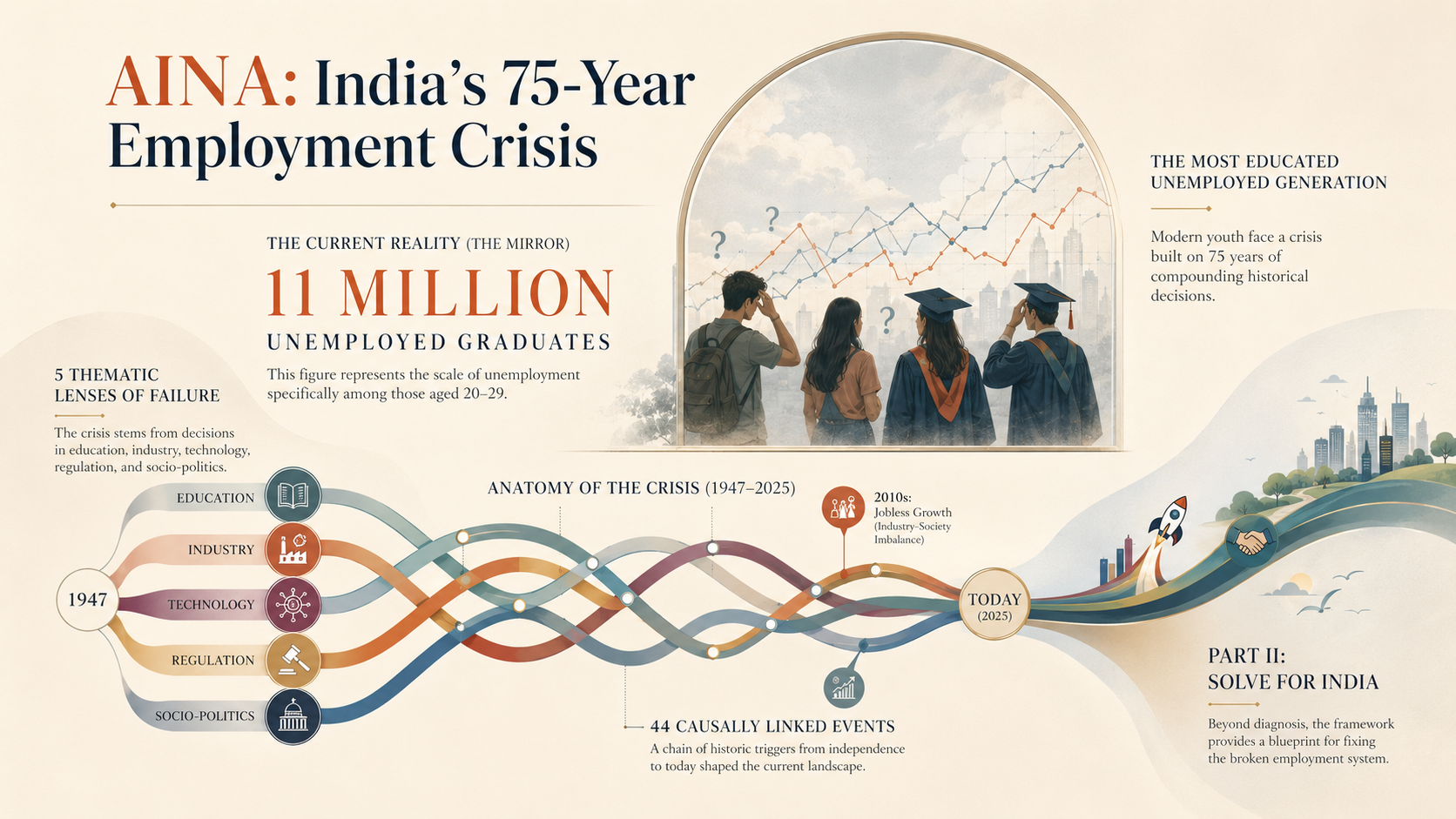
Eleven million. That's the number of graduates between the ages of 20 and 29 currently unemployed in India. Say it slowly. Eleven million people who did what they were told - studied hard, earned degrees, followed the path - and found nothing waiting for them on the other side.
This is neither bad luck, nor a sudden failure. It is the accumulated weight of 75 years of decisions, of which some were well-intentioned, while others were simply negligent, or structurally invisible until it was too late to see them clearly. Understanding how we arrived here isn't an academic exercise. It is the precondition for doing anything useful about it.
That's why we built AINA.
Why We Built It
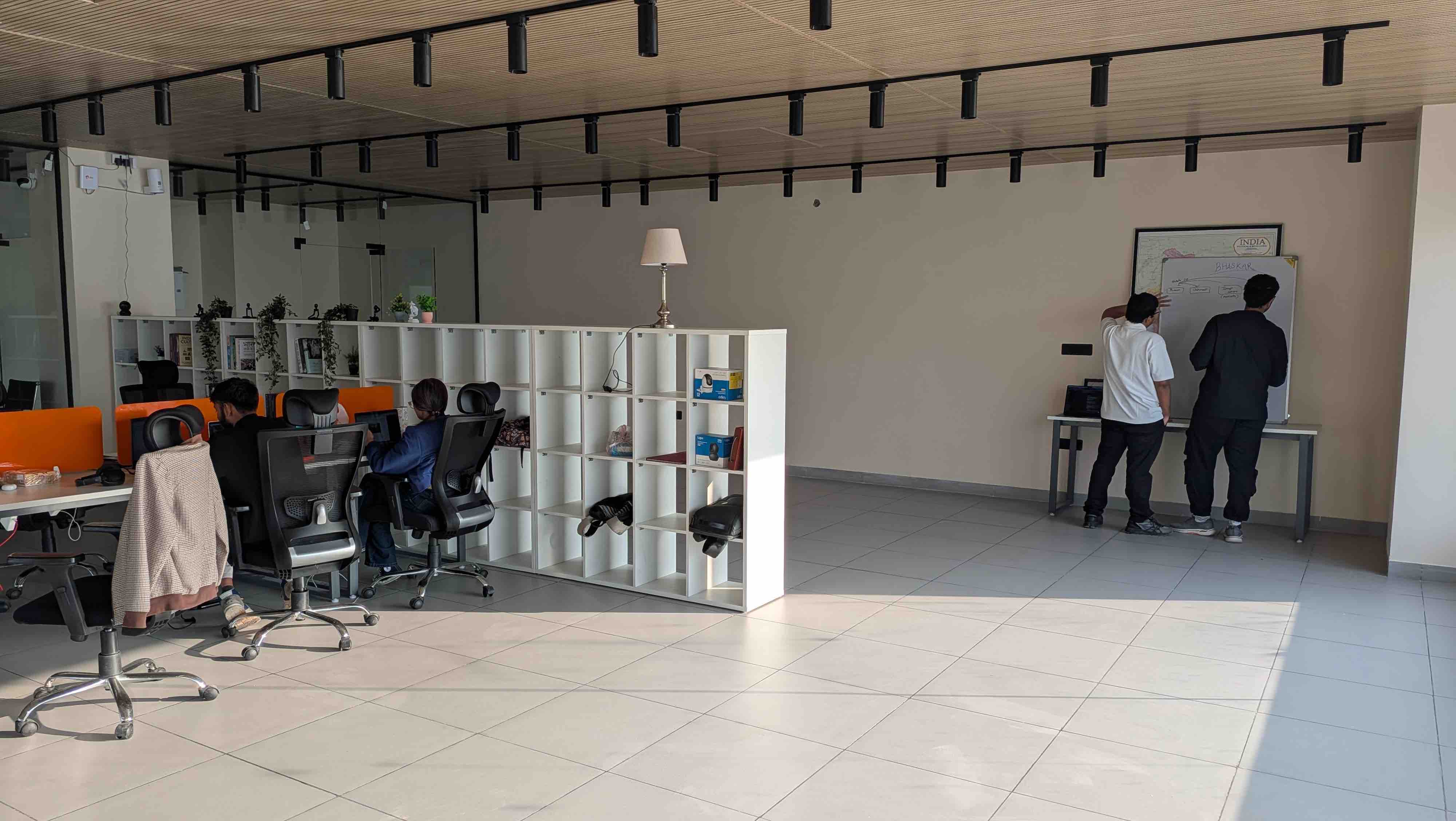
The seed of AINA was planted in Bhaskar's thesis - an attempt to trace India's employment crisis not as an economic abstraction, but as a lived, historical sequence. The research kept turning up the same uncomfortable pattern: decisions that seemed reasonable in isolation, each one amplifying the last, until the compounding became a crisis too large to attribute to any single cause.
That kind of complexity is hard to hold in your head. It's even harder to communicate. A written report flattens the causality. A set of charts strips the human story. What the research needed (and what the problem deserves) was a form that could carry both the data and the narrative at once.
We are a design and systems-thinking studio. We believe the way you present a problem shapes whether people can act on it. So we stopped writing about the crisis and started building something you could actually move through. The result:
AINA - a mirror to reflect and see the future.
What is AINA?
AINA is an interactive timeline covering India's journey from 1947 to 2025. At its core are 44 key events, mapped not as isolated facts but as causally connected nodes, each one showing what it responded to and what it set in motion.
The project examines these events through five thematic lenses:
Education: how the architecture of learning shaped (and mismatched) the workforce
Industry: the sectors that grew, stalled, or were left to decline
Technology: adoption curves, missed windows, and the digital divide
Regulation: the policies that protected some and excluded others
Socio-political fabric: the undercurrents that no economic model fully captures
You can filter by theme, trace a single thread across decades, or switch to Story Mode - a narrative walkthrough that weaves all 44 events into one coherent history of how India built the most educated unemployed generation on earth.
⚠️ The goal isn't to assign blame. It is to identify a pattern so we can work towards a solution.
What Comes Next
Part I is the diagnosis. Part II - Solve for India - is the intervention.
The same rigour that went into mapping the crisis is now being turned toward solutions: What has worked elsewhere? What is structurally unique to India? Where are the highest-leverage points for change? We're designing a second phase that moves from reflection to action - and we want to build it with people who are already in the work: researchers, policymakers, educators, founders, and practitioners who know parts of this problem from the inside.
If that's you, we want to hear from you.
An Invitation
AINA is live now at aina.adaptiv.me. Spend time with it. Follow the threads, run the Story Mode, and share it with others who thinks this crisis has an explanation.
And if you want to collaborate on Part II - whether you bring research, domain expertise, institutional access, or simply a clear-eyed view of what's broken and what isn't - reach out. The mirror is built. Now we figure out what to do with what we see.
Adaptiv Admin
@admin
Building the future of AI products at Adaptiv.Me.