JOURNAL
Browse our resources
Active Campaigns
● Open
Adapt for AI
Go from understanding how AI works to shipping a real product, built around a business use case, using vibe coding, with zero prior dev experience needed - in just one weekend!

Utkarshini
Meaning - a feminine Indian name of Sanskrit origin, commonly meaning "excellence," "brilliance," "progression," or "one who raises/lifts up" We wanted a name for our Indic LLM project, and we chose this name with great thought - since the spirit of this project is to lift our socieity collectively up by leveraging the wisdom locked in the Vedic corpus. As our life becomes increasingly dependent on Language Models, it feels unfair and deeply wrong that the Vedic corpus, the cornerstone of all civilisational wisdom is not given enough attention. If AI has to power our future lives, then let it be guided by the light of the Vedas and the imagination of the Puranas.

India Padhta Hai
A free, virtual, all-India book reading challenge for adults - built around India's stories, ideas, and voices.
Articles
The 3-Hour AI Workshop Won't Save Your Career
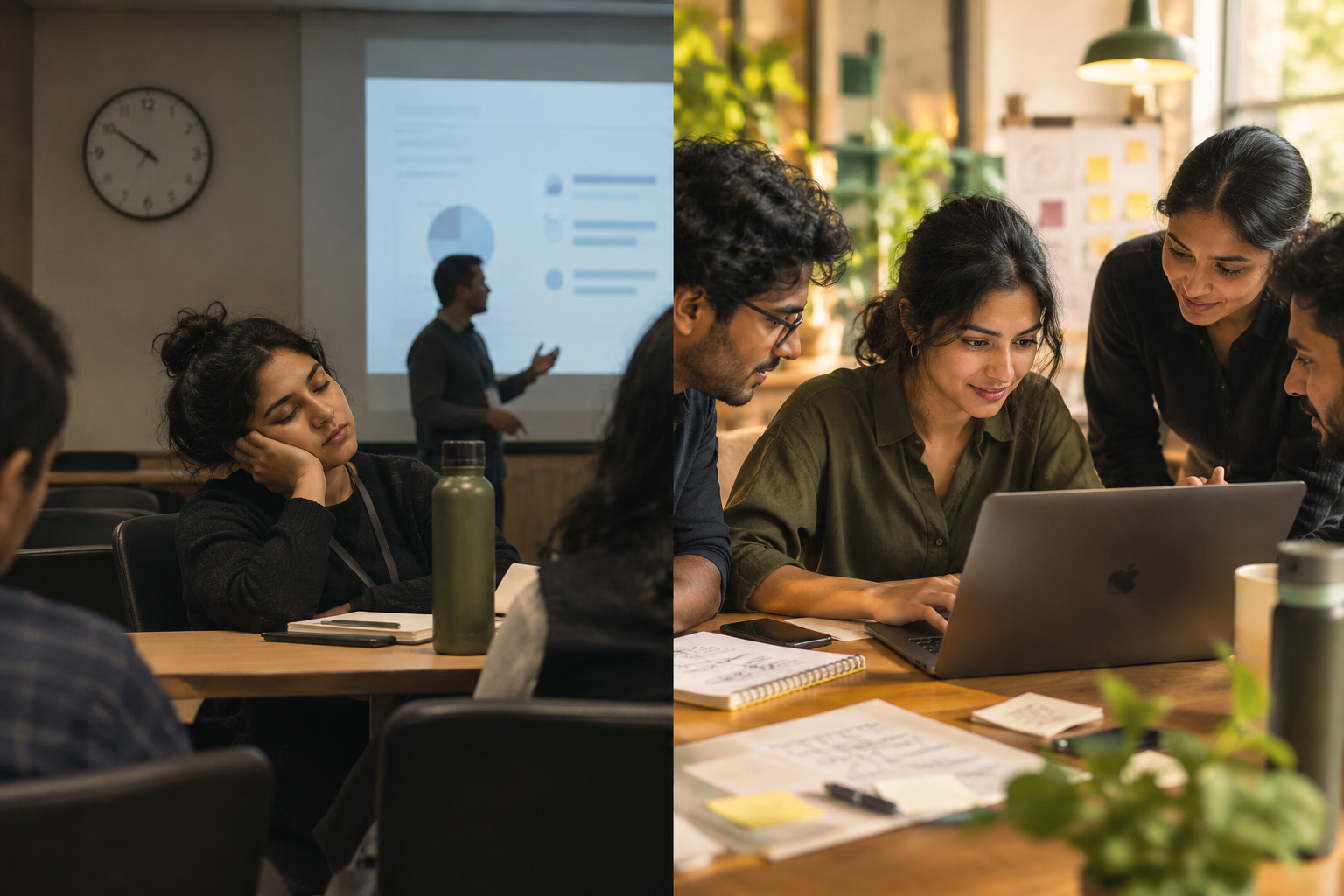
Short AI courses won't cut it in today's job market. Learn why holistic AI understanding, ethical thinking, and hands-on product building are what employers actually want.
Adaptiv Admin
Sep 16, 2026
Twelve Stamps and a City Rediscovered: Closing Out Independence Month at Project Bhaskar
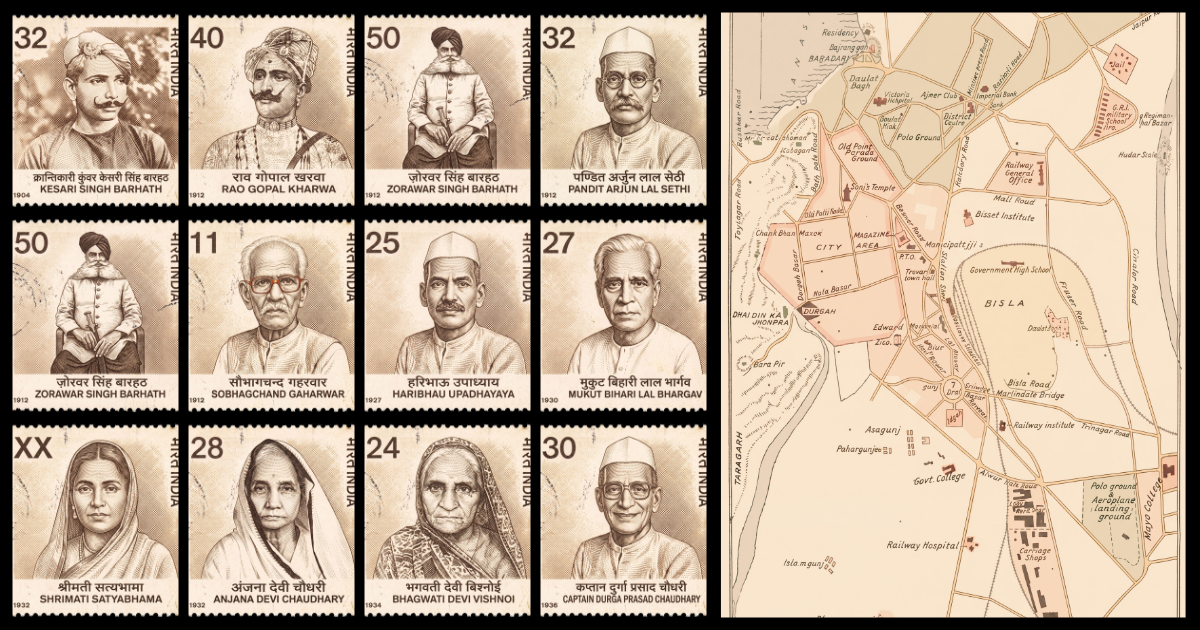
Twelve Ajmer freedom fighters, almost none photographed, reimagined as postage stamps for Project Bhaskar's Independence Month exhibition. From a secret bomb-making school to women who chose prison over privilege, discover how this show — and 45+ competition entries — revealed the role of the unsung heroes of India's freedom struggle.

Swatantrata Sangram Ke Nayak: The Stories That Stayed With Us
Project Bhaskar's Swatantrata Sangram Ke Nayak competition drew an overwhelming response. From these entries, we've selected ten write-ups for our Independence Day exhibition — stories of Subhas Chandra Bose, Rani Gaidinliu, and lesser-known freedom fighters like 12-year-old martyr Baji Rout, told in the words of the people who submitted them.
Competition: Swatantrata Sangram Ke Nayak
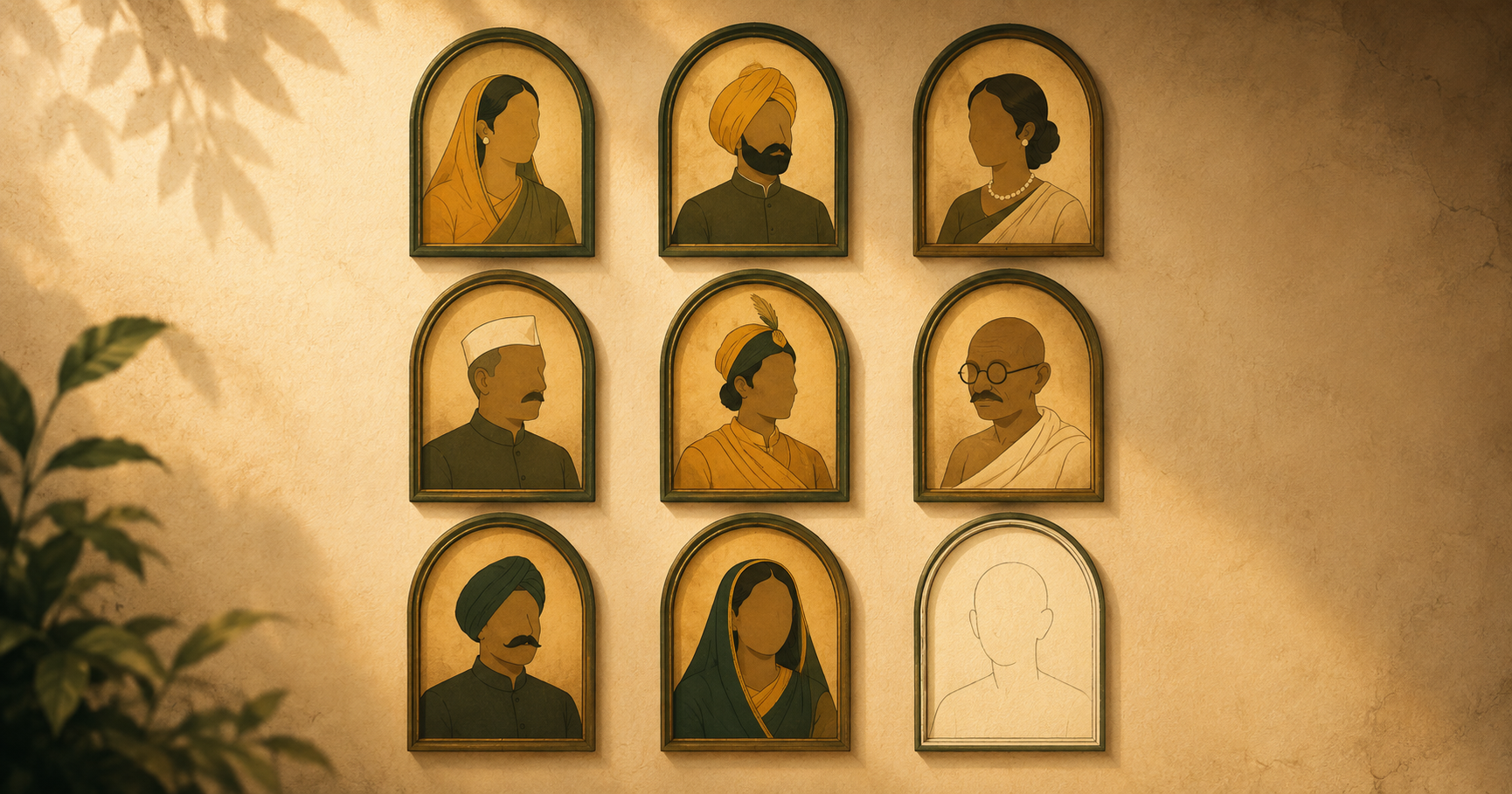
Open all for posters, quotes, and write-ups from across India about the Freedom Fighter who made an impact on you.
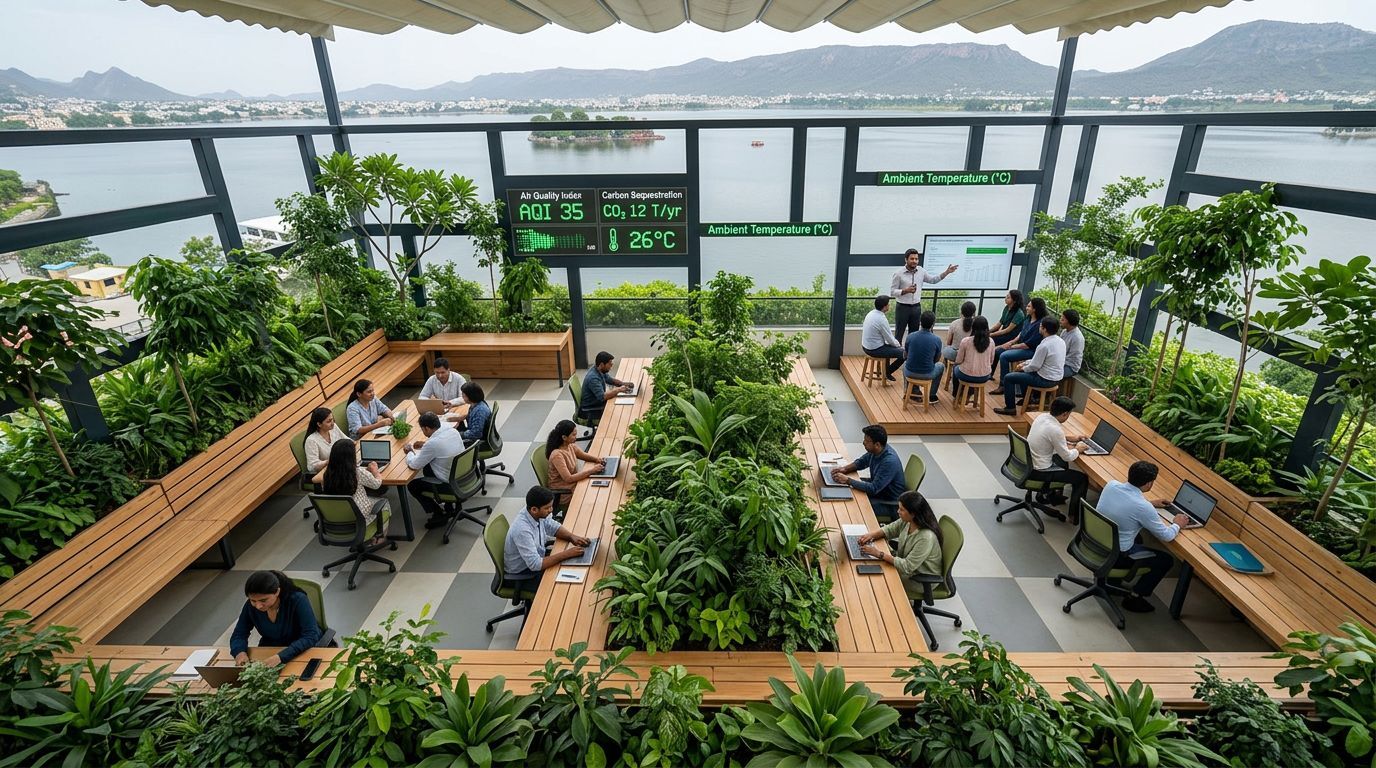
Case Study: How Chhaon Was Built to Turn Shade Into Infrastructure You Can Measure
Chhaon is a climate tech project by Project Bhaskar, built at Ana Sagar in Ajmer, Rajasthan. It's three things under one roof: a forest grown using the Miyawaki method, a co-working space built as climate tech infrastructure with no air conditioning, and a library.
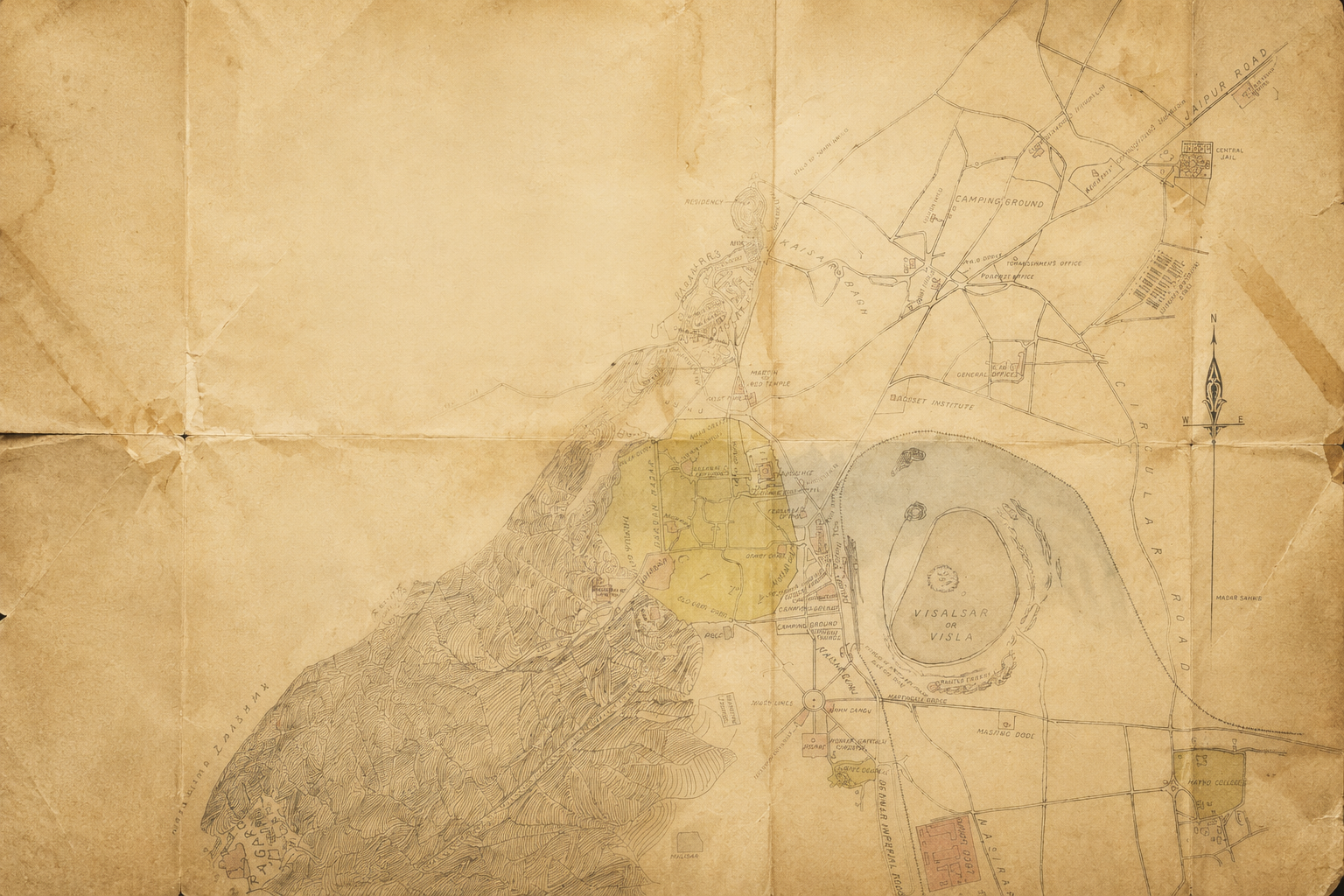
1000 Years of the Valley: Rediscovering Ajmer Through Maps
Discover how Ajmer evolved over a thousand years through maps, paintings, archival records, and data visualisations. 1000 Years of the Valley traces the city's journey from a strategic Rajput settlement to an imperial centre, a state capital, and the Ajmer we know today through an immersive scenographic exhibition.

Why India Must Build Its Own Cultural AI
India's 5,000-year intellectual tradition is the most underrepresented dataset in modern AI. Project Bhaskar makes the case for building Indic language models, culturally grounded applications, and AI-generated media from within — arguing that genuine intelligence has never been culture-neutral, and that the next decade of Culture Tech will prove it.

Chhaon (छाँव): Shade as Infrastructure
Ajmer's streets hit 46°C in summer, and no data-verified cooling exists in the city today. Chhaon, Adaptiv's new climate experiment at Ana Sagar, uses native-only Miyawaki planting, live sensor data, and an urban-forest inspired café to prove that shade is not just comfort. It is infrastructure.

India Padhta Hai: Bhaskar's Book Reading Challenge
India Padhta Hai is a free, all-India virtual book reading challenge by Project Bhaskar. Read one book a month across three themes - Roots, India Now, Imagine. In an age of AI, reading is how we stay sharp, keep languages alive, and think for ourselves. Join us this July.
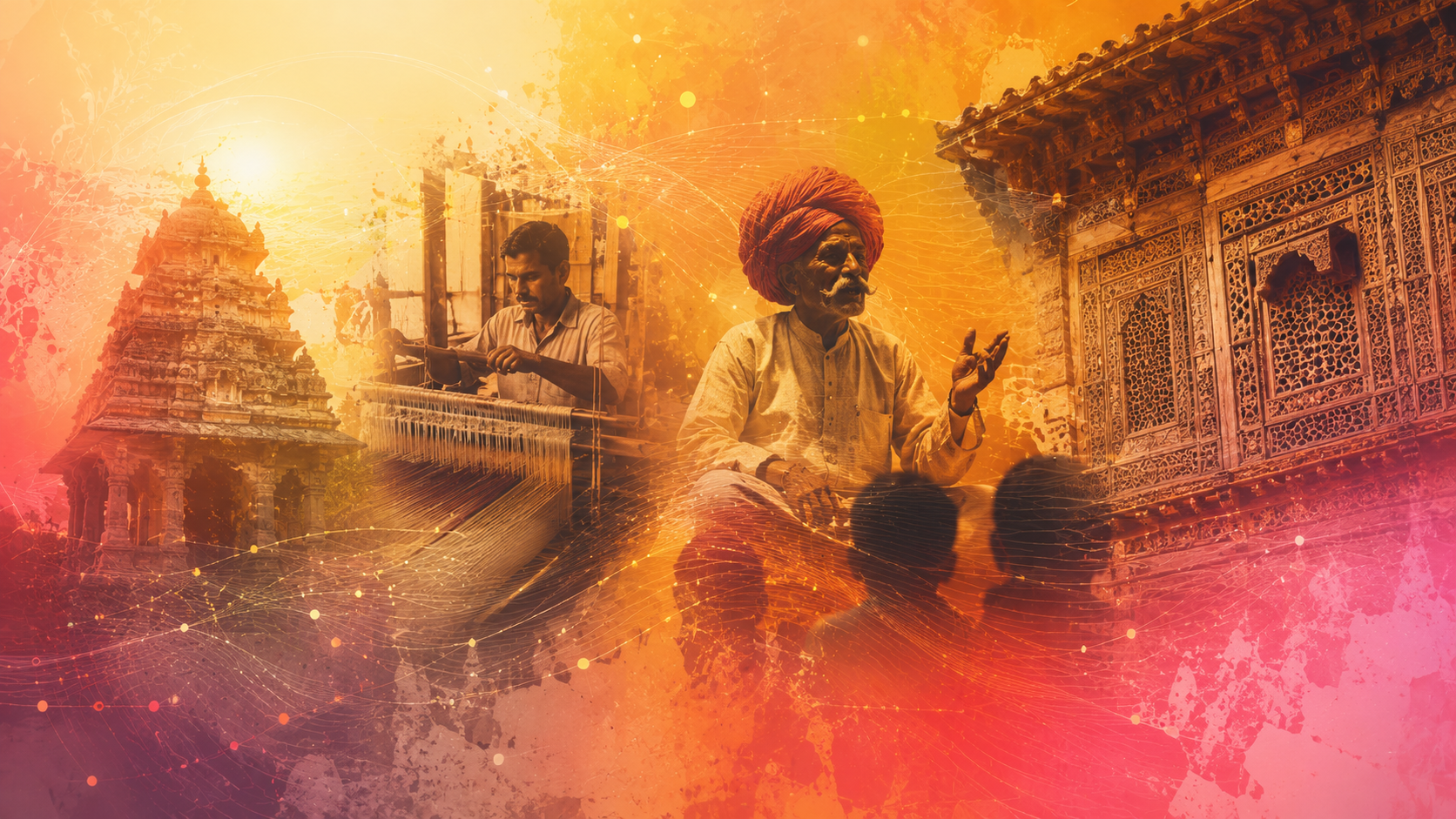
What if cities were the real museum?
On International Museum Day, Project Bhaskar makes the case that the traditional museum model — objects behind glass, removed from context — is the wrong framework for preserving living culture. India's real archives are its inhabited cities, its practised crafts, its spoken languages. And they are disappearing faster than any institution is moving.

Utkarshini: The Vedic AI That Actually Understands the Texts
Every major AI gets the Vedas wrong - fluent, confident, and subtly inaccurate. Utkarshini is Project Bhaskar's answer: the first AI model trained specifically on the Vedas and Upanishads, built on a scholar-reviewed parallel corpus that doesn't yet exist anywhere in machine-readable form. This is how we're building it.

India Has More Stories Than Storytellers. AI Changes That Equation.
India holds 5,000 years of untold stories — and AI is finally building the infrastructure to tell them. Project Bhaskar is building the infrastructure to fix it: reading apps, language APIs, AI tools, and human-centred events that together ensure that our stories finally find the audiences waiting for them.

Release Note: AINA, a Mirror for India's Employment Crisis
AINA is an interactive project mapping 75 years of India's employment crisis — from Independence to 2025. Explore 44 causally linked events across Education, Industry, Technology, Regulation, and Socio-political fabric to understand how 11 million graduates became unemployed, and what it will take to change course.

Project Bhaskar and the culture quotient of society
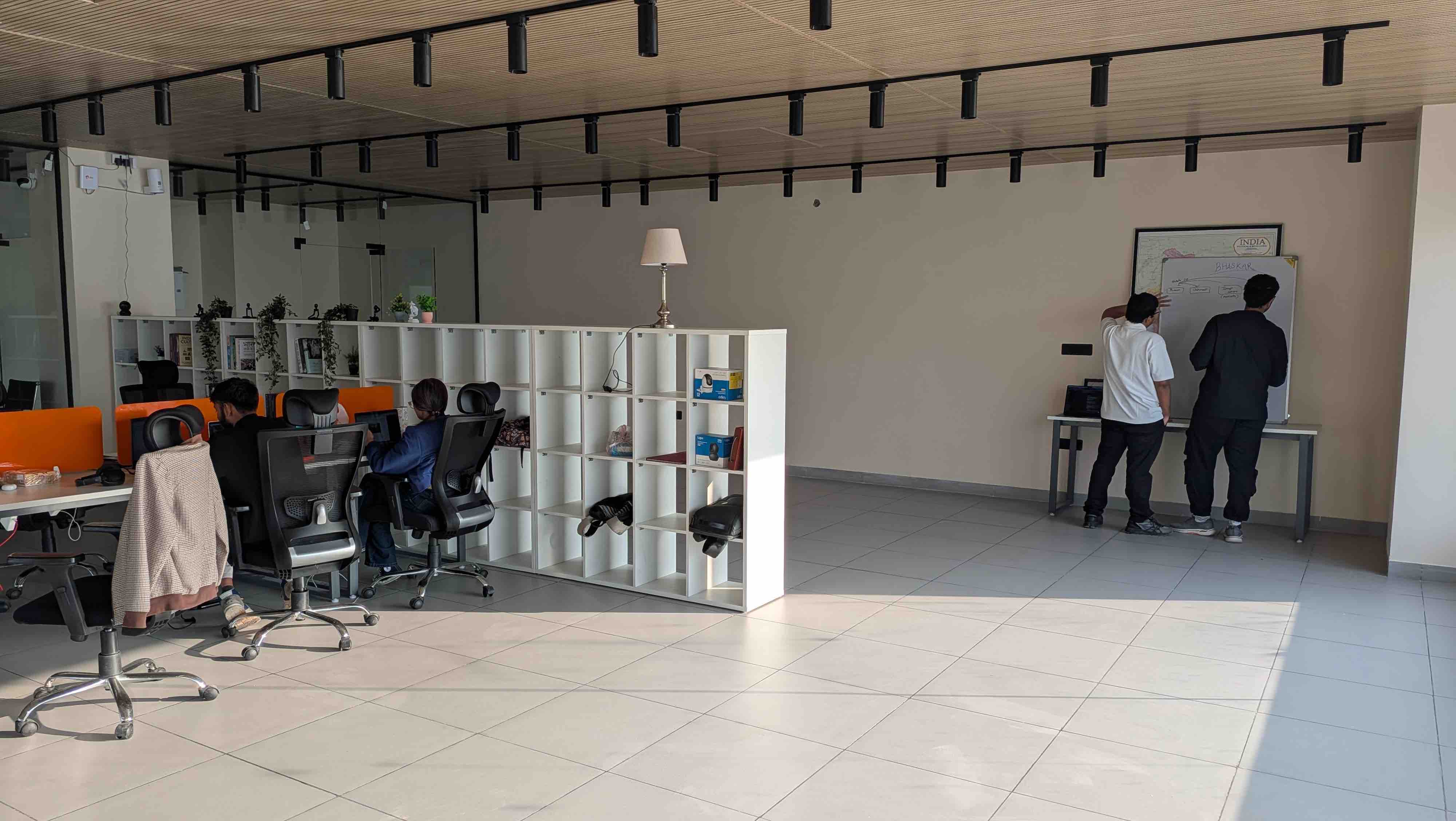
Bhaskar is a Culture + Tech lab. We hope to build experiences, conduct research and publish observations on everything related to Indian culture, society and climate - because these forces are deeply interconnected.

Case Study: How Be A Reader was designed to rebuild the habit of deep reading
Reading is in decline, and no app is building for Indian literary traditions. Be A Reader is a deliberate reading and reflection tool for Hindi, English, Sanskrit, and regional literature. This case study documents the problem, the product decisions, and the technology behind it.

Why Did an AI Flag a Raksha Bandhan Story as Prohibited Content?
A Hindi literary passage about Raksha Bandhan was blocked by AI safety filters as "prohibited content." The culprit? Idiomatic expressions like 'खा बैठी' and culturally specific dynamics that moderation systems, trained primarily on English-language data, consistently misclassify. We break down why — and what needs to change.

Why Sairandhri? The Hidden Story Behind Our AI Film
Discover why Project Bhaskar chose Sairandhri (Draupadi's hidden identity during the Agyatwas) as the central theme of their AI film to explore female agency, identity under duress, and patriarchal resistance in Indian mythology, revealing how lesser-told stories offer powerful narratives for contemporary AI filmmaking.

Why is deep reading important in the age of AI?
As AI reshapes how we work and think, Project Bhaskar makes the case for deep reading as the foundation of critical thinking, creativity and empathy. Explore why we are building a reading space in Ajmer, the Bhaskar Reader app, and why India's regional literature holds the key to cultural sovereignty.
Case Study: How Magic Was Built to Make Paris Feel Smaller
Paris generates more cultural events every week than any one person can track — and no tool existed to make sense of it. Magic is the AI-powered assistant built for Paris residents that learns your tastes, monitors events across dozens of sources, and reminds you before you miss anything.
Case Study: How Lama Was Built to Close the Gap Between Business Data and Business Decisions
Business owners shouldn't need a developer to answer a data question. Lama is the AI-native platform that ingests your project data, analyses it automatically, and delivers rich dashboards with actionable recommendations — no SQL, no waiting weeks for a report. Here's how it was built, and why it works.
Case Study: How Globist Is Building the AI Workspace To Kill the Marketing Tab Spiral
Marketing teams don't have a tools shortage - they have a fragmentation crisis. Globist is the AI-powered workspace that lets GTM teams go from live market research to finished creative assets without switching platforms. One canvas. Persistent context. Real-time data. Here's how it was built and why it works.
Case Study: How Ask Sétu Was Built to Guide Indian Students Through Every Stage of Life in France
Case Study: How Paays built a one-of-a-kind travel lending experience
Paays built PreQ to solve a problem every budget-conscious traveller knows: the loan arrives too late, after the inspiration is gone. By surfacing a pre-approved borrowing amount before a user even picks a destination - and layering in exclusive partner deals on top - Paays reimagined travel financing as the first step in the journey, not the last.
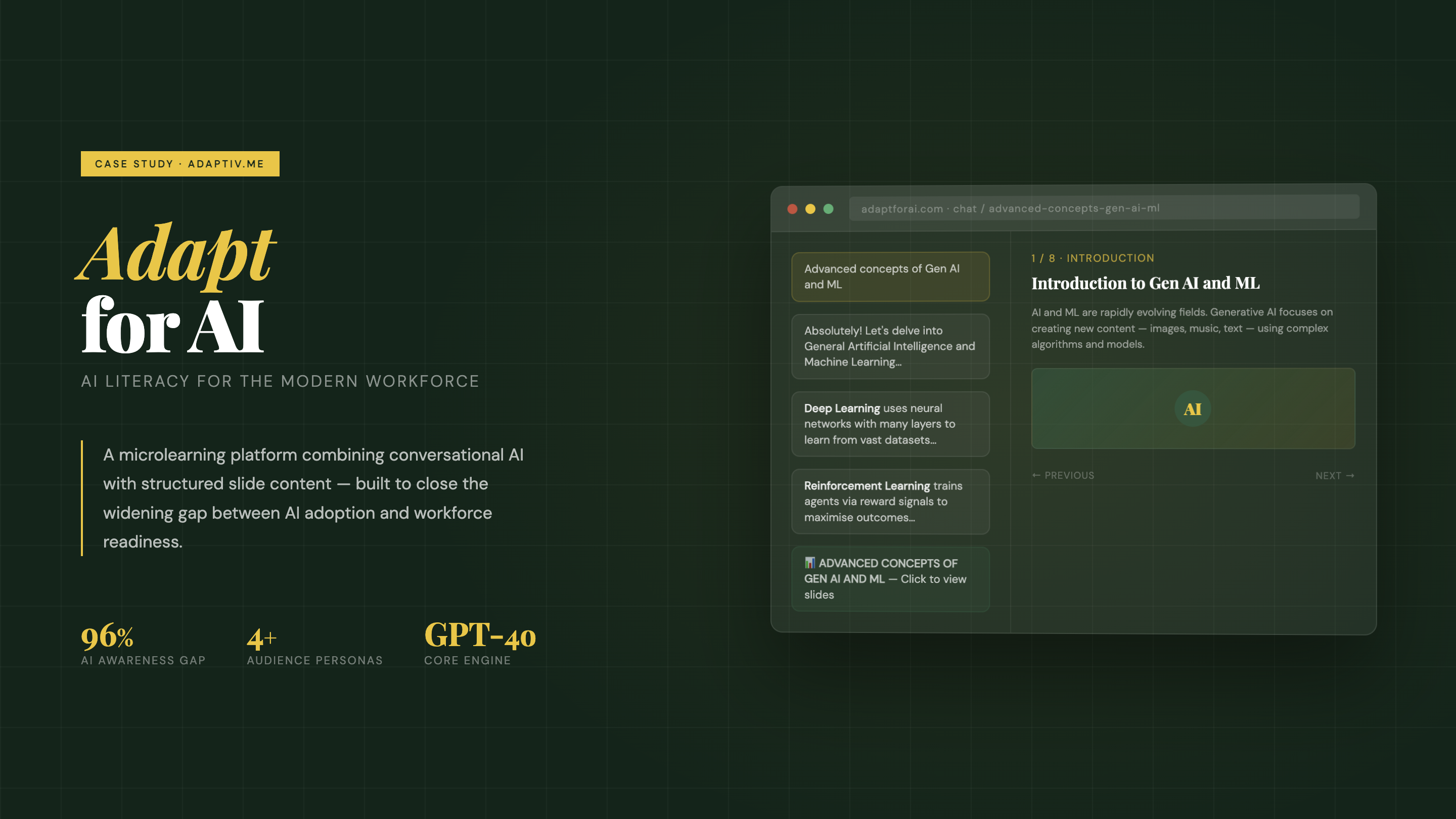
Case Study: How Adapt for AI Was Built to Close the Applied AI Literacy Gap
Adapt for AI helps close the critical AI skills gap with a chat-and-slides micro-learning platform built for students, professionals, and entrepreneurs. Combining conversational AI, structured lessons, and persona-driven pathways, it turns AI urgency into practical capability, making applied AI literacy accessible, engaging, and relevant for today’s fast-changing workforce.

From Images to Health Insights: Engineering the Arogyagram AI Health Platform
Arogyagram is an AI-powered health platform designed to understand lifestyle behaviors and transform them into meaningful health insights. By combining computer vision, behavioral analytics, knowledge retrieval, and conversational AI, the system analyzes everyday activities, generates personalized recommendations, and helps users build healthier habits through intelligent feedback, real-time guidance, and engaging health tracking.