Website Developments
Ayush Bhardwaj
Nov 1, 2026 · 6 min read
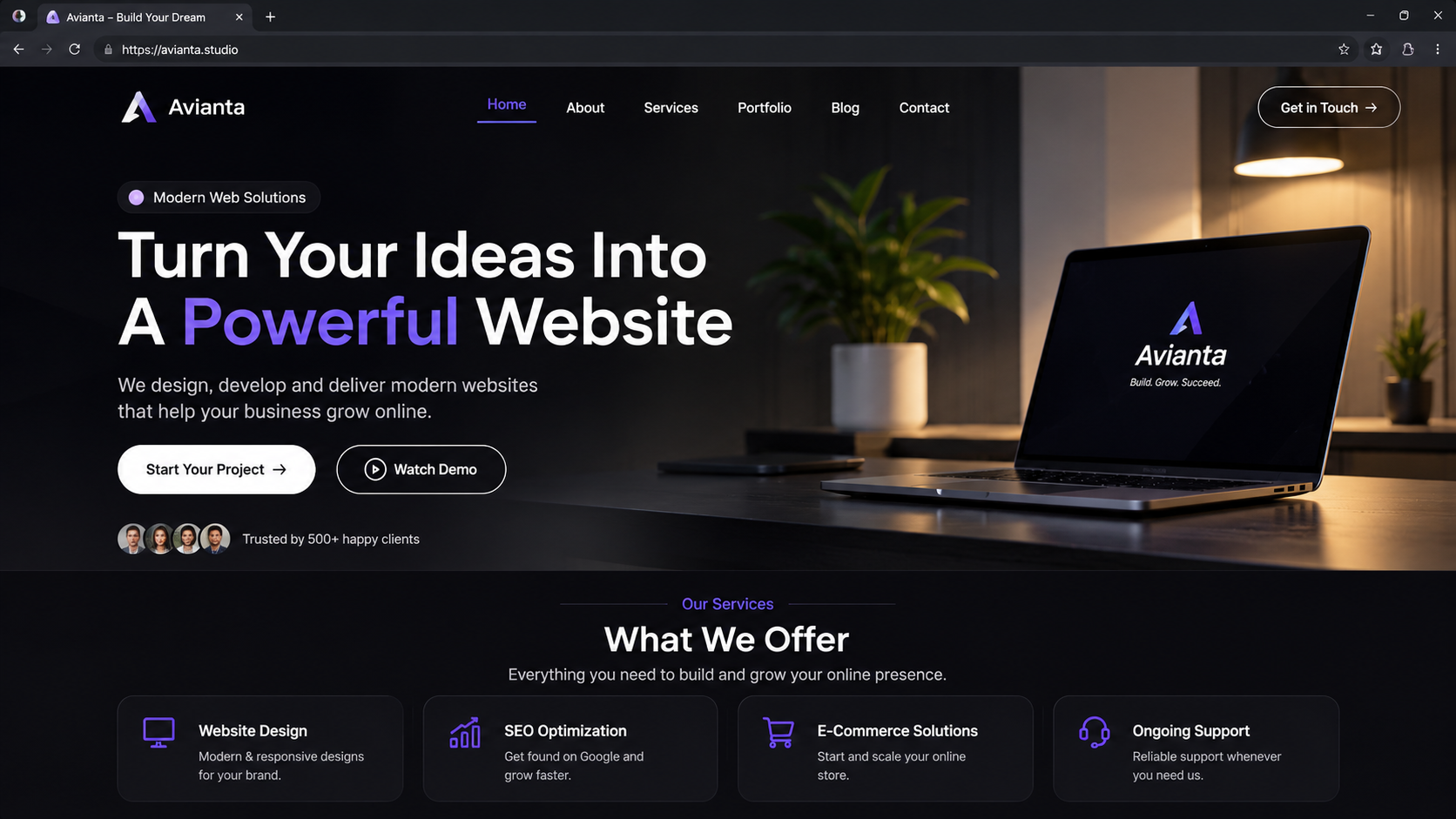
Beyond the Screen: How Website Development Turns Ideas Into Digital Experiences
“Every great business has a story. In today's world, your website is where that story begins.”
The Story of a Business That Almost Nobody Knew
Imagine a young entrepreneur named Alex who owns a small clothing brand. His products are unique, the quality is excellent, and his customers love what he sells.
But there is one problem.
People who walk past his store can discover his products, but what about the thousands of potential customers who never pass by?
He creates social media accounts, posts pictures, and waits for customers. Some people show interest, but many leave without making a purchase.
One day, Alex realizes something important: His business needs more than just social media visibility. It needs a digital identity.
That's when he decides to build a website.
Within weeks, his business has a professional online presence. Customers can explore his products, learn about his brand, contact his team, and make purchases without visiting his physical store.
His business hasn't changed overnight. His products are still the same. But the way people discover and experience his brand has completely transformed.
This is the real power of website development.
1. What Exactly Is Website Development?
Website development is the process of creating, designing, building, and maintaining websites that work across different devices.
But it's much more than writing code or putting pictures on a screen.
It's about creating a digital environment where visitors can understand a business, explore its services, interact with its brand, and take action.
A well-developed website combines three important elements:
- Design: How the website looks and feels.
- Functionality: How the website works and responds to visitors.
- User Experience (UX): How easily visitors can navigate and use the website.
The best websites bring all three together.
2. Why Does Every Modern Business Need a Website?
Think about the last time you wanted to purchase something or find a service.
What did you do first?
Most likely, you searched online.
Today's customers expect businesses to be accessible digitally. A website helps businesses meet those expectations.
Here are some important advantages:
24/7 Online Presence
Your website remains accessible even when your physical office or store is closed.
Professional Brand Identity
A professionally designed website creates a consistent identity and helps communicate what makes your business different.
Customer Trust
Visitors can explore your services, read important information, see your work, and contact you.
Wider Audience Reach
A website allows businesses to reach potential customers beyond their immediate geographical location.
Better Customer Experience
Instead of repeatedly answering basic questions, businesses can provide information through dedicated website pages.
3. What Makes a Website Truly Successful?
A beautiful website is not necessarily a successful website.
Imagine entering a luxury showroom where everything looks impressive, but you cannot find the products, prices, or assistance.
You would probably leave.
The same thing happens online.
A successful website should include:
- Responsive Design: It should work smoothly on smartphones, tablets, and computers.
- Fast Loading Speed: Visitors shouldn't have to wait unnecessarily.
- Simple Navigation: Important information should be easy to find.
- Clear Content: Visitors should immediately understand what the business offers.
- Strong Security: Appropriate security measures should protect the website and its users.
- Clear Call-to-Action: Visitors should know how to contact, book, purchase, or enquire.
A website should not simply impress visitors. It should help them accomplish something.
4. Different Types of Websites
Every business has different requirements. That's why website development isn't a one-size-fits-all process.
Business Websites
Designed for companies, agencies, and professional service providers who want to establish their online presence.
E-commerce Websites
Online stores that allow customers to explore products, add items to their carts, and purchase online.
Portfolio Websites
Ideal for photographers, designers, developers, artists, and freelancers who want to showcase their work.
Educational Websites
Platforms where schools, coaching institutes, and educational organizations can share information and resources.
Healthcare Websites
Websites for clinics, hospitals, and healthcare professionals that provide service information, doctor profiles, and appointment enquiries.
Landing Pages
Focused web pages designed to promote a particular product, service, event, or offer.
5. The Journey From an Idea to a Website
Creating a professional website involves several stages.
Step 1: Understanding the Business
Before designing anything, developers understand the business, its audience, goals, and requirements.
Step 2: Planning and Structure
The website's pages, navigation, content, and overall structure are planned.
Step 3: Designing the Experience
Layouts, colours, typography, images, and visual elements are selected to create a consistent appearance.
Step 4: Development
The design is transformed into a functional website using suitable technologies and development tools.
Step 5: Testing
The website is checked for responsiveness, loading speed, navigation issues, and functionality.
Step 6: Launch and Maintenance
After testing, the website is published. Regular updates, backups, security checks, and improvements help keep it running smoothly.
6. The Future of Website Development: AI Is Changing Everything
Website development is evolving rapidly.
Artificial intelligence is changing how websites are planned, designed, and developed.
Tasks that once required significant manual effort can now be accelerated with AI-powered tools.
AI can assist with:
- Generating website layouts and design ideas.
- Creating website content.
- Building initial website structures.
- Improving user experiences.
- Identifying potential issues.
- Automating repetitive development tasks.
However, AI doesn't eliminate the importance of human creativity, planning, and technical knowledge.
The future belongs to people who understand how to combine technology with problem-solving.
7. Your Website Is More Than Just a Digital Address
Let's return to Alex.
His website wasn't simply another business expense. It became a place where customers could discover his brand, understand his products, and connect with his business.
That's what makes website development valuable.
A website is often the first impression a potential customer gets of a business. And as the saying goes, first impressions matter.
Whether you're running a small startup, managing an established company, offering professional services, or building your personal brand, your digital presence deserves attention.
Because in a world where people search before they purchase, being online isn't just an advantage. It's an opportunity.
---
Final Thoughts
Website development is not just about creating pages, selecting colours, or adding animations.
It's about transforming ideas into meaningful digital experiences.
A good website tells a story. A great website makes people want to become part of it.
Your next customer could be searching for you right now. The question is: Will they find you?
Ayush Bhardwaj
@vayora
More Articles