Human-Guided Framework for Building Better Indic Language AI
Geetanjali Shrivastava
Mar 8, 2026 · 3 min read
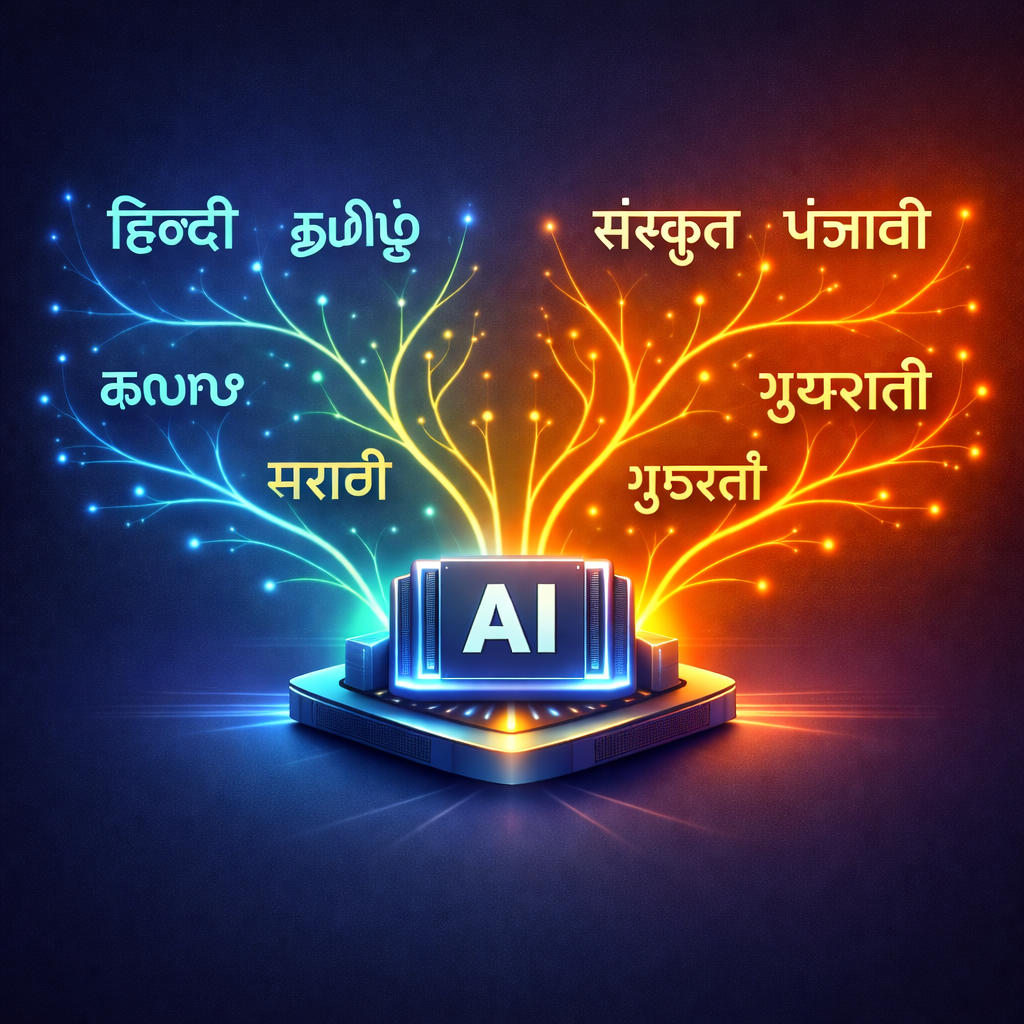
Artificial intelligence systems rely heavily on data. The performance of language models, search systems, and conversational AI depends on the quality of the information used to train and evaluate them. For Indian languages, this presents a significant challenge. Much of the available data is gathered through automated web scraping, resulting in datasets that can contain errors, inconsistencies, incomplete context, or cultural inaccuracies.
These issues affect the reliability of AI systems built for Indic languages.
At Bhaskar, we believe that improving Indic language AI requires a more structured approach to dataset evaluation and human review. This perspective led to the development of UTKARSHINI - a framework designed to support testing, knowledge annotation, and human review of scraped Indic language information.
The Data Quality Challenge in Indic AI
Many modern AI models are trained using large-scale datasets collected from the internet. While this approach provides scale, it often sacrifices precision and contextual understanding.
For Indic languages, several additional challenges emerge:
uneven digital representation across languages
inconsistent transliteration and spelling conventions
fragmented or incomplete knowledge sources
limited quality control mechanisms
These challenges make it difficult to build AI systems that are both accurate and culturally informed.
Improving dataset quality therefore becomes an essential step in advancing Indic language technology.
Introducing UTKARSHINI
UTKARSHINI is designed as a user interface and workflow system that enables human contributors to review, test, and annotate scraped information. The framework focuses on three key functions:
Testing
Datasets gathered through automated scraping can be systematically tested to identify inconsistencies, missing information, or structural issues.
Knowledge Annotation
Human contributors can annotate datasets with contextual knowledge, improving the semantic richness and clarity of the information.
Review and Validation
Structured review mechanisms allow datasets to be evaluated and refined before they are used in AI systems.
Together, these processes create a human-guided feedback loop that helps improve dataset quality.
Why Human-Guided Systems Matter
AI systems are powerful tools, but they cannot fully replace human understanding—especially when dealing with language, culture, and contextual knowledge. Human-guided annotation systems provide several benefits:
improved dataset reliability
better contextual interpretation
stronger representation of linguistic nuance
reduced propagation of errors in AI models
By combining automated data collection with human expertise, frameworks like UTKARSHINI can help create more trustworthy datasets for Indic language AI development.
Supporting Research and Collaboration
UTKARSHINI is intended not only as a technical tool but also as a research platform for collaborative development.
Dataset creation and evaluation benefit greatly from interdisciplinary participation. Linguists, technologists, scholars, and domain experts all bring valuable perspectives to the process.
By providing a structured interface for testing and annotation, UTKARSHINI aims to support collaborative research in areas such as:
Indic language datasets
AI evaluation frameworks
cultural knowledge representation
multilingual information systems
This collaborative approach helps ensure that dataset development reflects both technical standards and cultural understanding.
Building Better Foundations for Indic AI
Reliable AI systems require reliable data. For Indian languages, improving dataset quality is one of the most important steps toward building AI tools that are accurate, inclusive, and culturally aware. UTKARSHINI represents an effort to create practical infrastructure for human-guided dataset development, helping bridge the gap between large-scale data collection and meaningful linguistic understanding.
Researchers, linguists, and institutions interested in Indic language datasets, evaluation frameworks, or collaborative annotation systems are invited to contact us to explore opportunities for working together.
Geetanjali Shrivastava
@geetanjalishrivastava
More Articles
Why Collaboration Matters for the Future of AI and Cultural Knowledge

Ethics and Cultural Intelligence in AI: Designing Technology That Understands Context

Multimodal AI for Indian Knowledge Systems: Beyond Text-Based Intelligence

AI for the Common Good: Building Technology That Benefits Society