Multimodal AI for Indian Knowledge Systems: Beyond Text-Based Intelligence
Geetanjali Shrivastava
Mar 8, 2026 · 3 min read

Artificial intelligence systems have traditionally focused on text. Language models, search engines, and many knowledge systems rely primarily on written data to understand and generate information. However, much of human knowledge, especially within cultural and historical traditions, exists beyond text.
In India, knowledge systems often include visual art, manuscripts, oral storytelling, music, performance traditions, and symbolic imagery. These forms of knowledge carry meaning that cannot always be captured through text alone. To fully represent these systems in the digital world, AI must evolve beyond text-based approaches, and this is where multimodal AI becomes important.
At Bhaskar, exploring multimodal innovation is one of the objectives guiding our work in cultural knowledge systems and AI research.
What Is Multimodal AI?
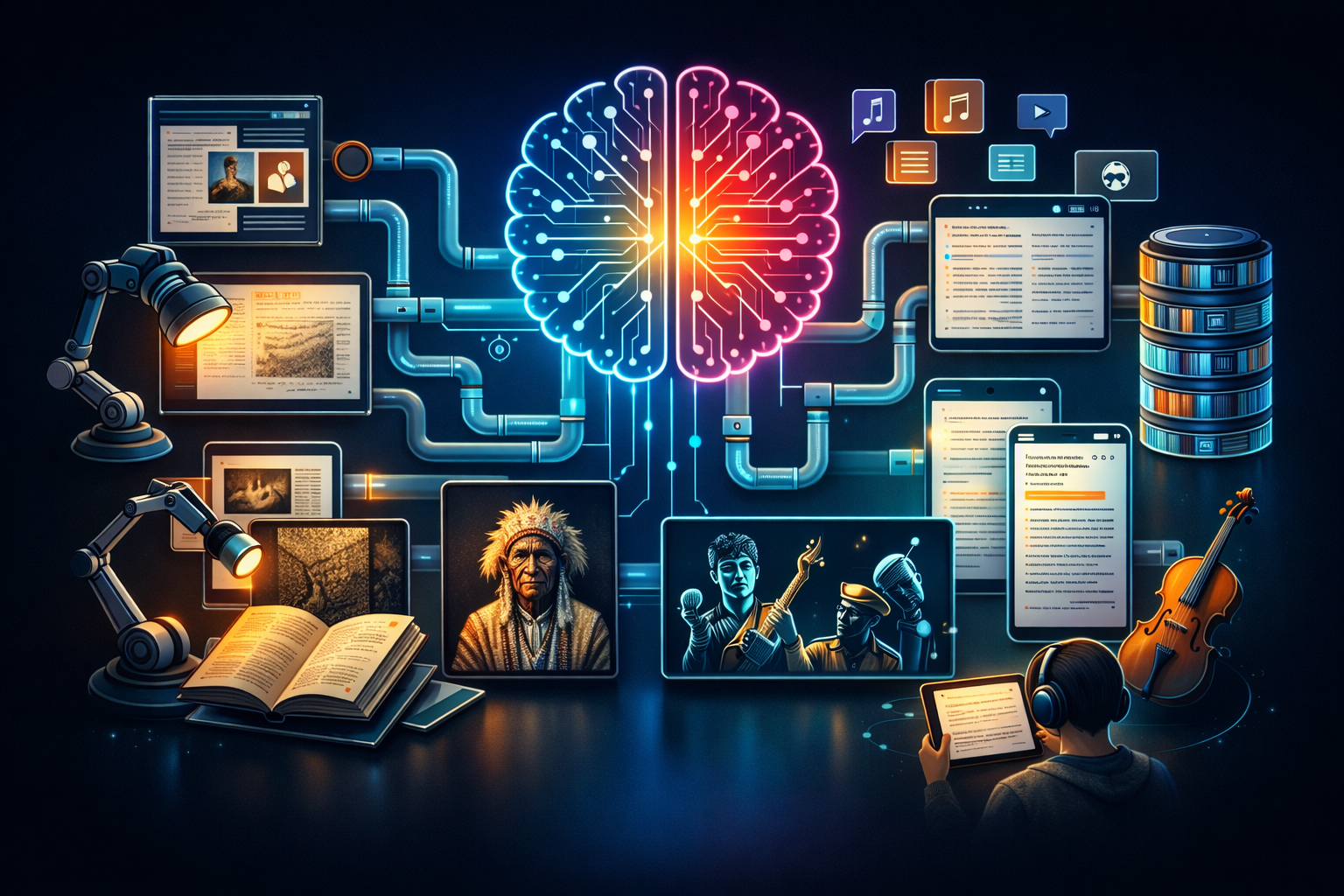
Multimodal AI refers to artificial intelligence systems capable of processing and connecting multiple types of data simultaneously. Instead of relying only on text, these systems can work with combinations of:
images
audio recordings
video
manuscripts and scanned documents
structured metadata
By integrating multiple forms of information, multimodal AI can provide a more complete representation of complex knowledge domains. This approach is particularly valuable when working with historical archives and cultural collections, where meaning often emerges from the relationship between different forms of media.
Why Multimodal Systems Matter for Cultural Knowledge
Many cultural traditions contain layers of meaning that span visual, linguistic, and historical contexts. For example:
a painting may contain symbolic motifs linked to historical narratives
manuscripts may combine text with illustrations and calligraphy
oral traditions may accompany visual or performative practices
Text-only systems struggle to capture these relationships. Multimodal AI, by contrast, allows digital systems to connect these elements and present them as integrated knowledge networks. This capability opens new possibilities for researchers, educators, and cultural institutions seeking to explore complex cultural material.
Applications in Cultural and Knowledge Systems
Multimodal AI can support a wide range of applications related to cultural knowledge. Some examples include:
Artwork classification and contextual discovery
AI systems can analyse visual elements of artworks and connect them to historical narratives or related collections.Digitised manuscripts and archives
Combining image recognition with text analysis can help interpret manuscripts that include both visual and written components.Cultural storytelling platforms
Multimedia archives can be presented in ways that combine narrative, visual material, and historical context.Cross-cultural knowledge exploration
Researchers can discover connections across collections that might otherwise remain hidden.
These applications help transform static digital archives into interactive knowledge systems.
Challenges in Multimodal AI
Despite its potential, multimodal AI presents several technical and conceptual challenges. These include:
limited datasets for culturally specific material
difficulty interpreting symbolic or stylistic elements
the need for contextual metadata
ensuring ethical use of cultural data
Addressing these challenges requires interdisciplinary collaboration between technologists, historians, linguists, and cultural scholars. Human expertise remains essential in interpreting cultural meaning and guiding responsible AI development.
Bhaskar’s Multimodal Exploration
Bhaskar’s work in multimodal innovation connects with several broader research objectives. Our initiatives aim to explore how multimodal systems can support:
cultural preservation
digital knowledge representation
language technology for cultural documentation
AI systems that reflect complex knowledge traditions
By combining visual, textual, and contextual data, we seek to contribute to digital systems that represent cultural knowledge more accurately and meaningfully.
Researchers, technologists, and cultural institutions interested in multimodal AI, cultural archives, and knowledge systems are invited to connect with us to explore collaborative research opportunities.
Geetanjali Shrivastava
@geetanjalishrivastava
More Articles
Why Collaboration Matters for the Future of AI and Cultural Knowledge
Ethics and Cultural Intelligence in AI: Designing Technology That Understands Context

AI for the Common Good: Building Technology That Benefits Society
How Technology Can Protect and Revive Cultural Heritage