Rendering Home: An AI Film on Ajmer
Anjali Gurjar
Mar 10, 2026 · 12 min read
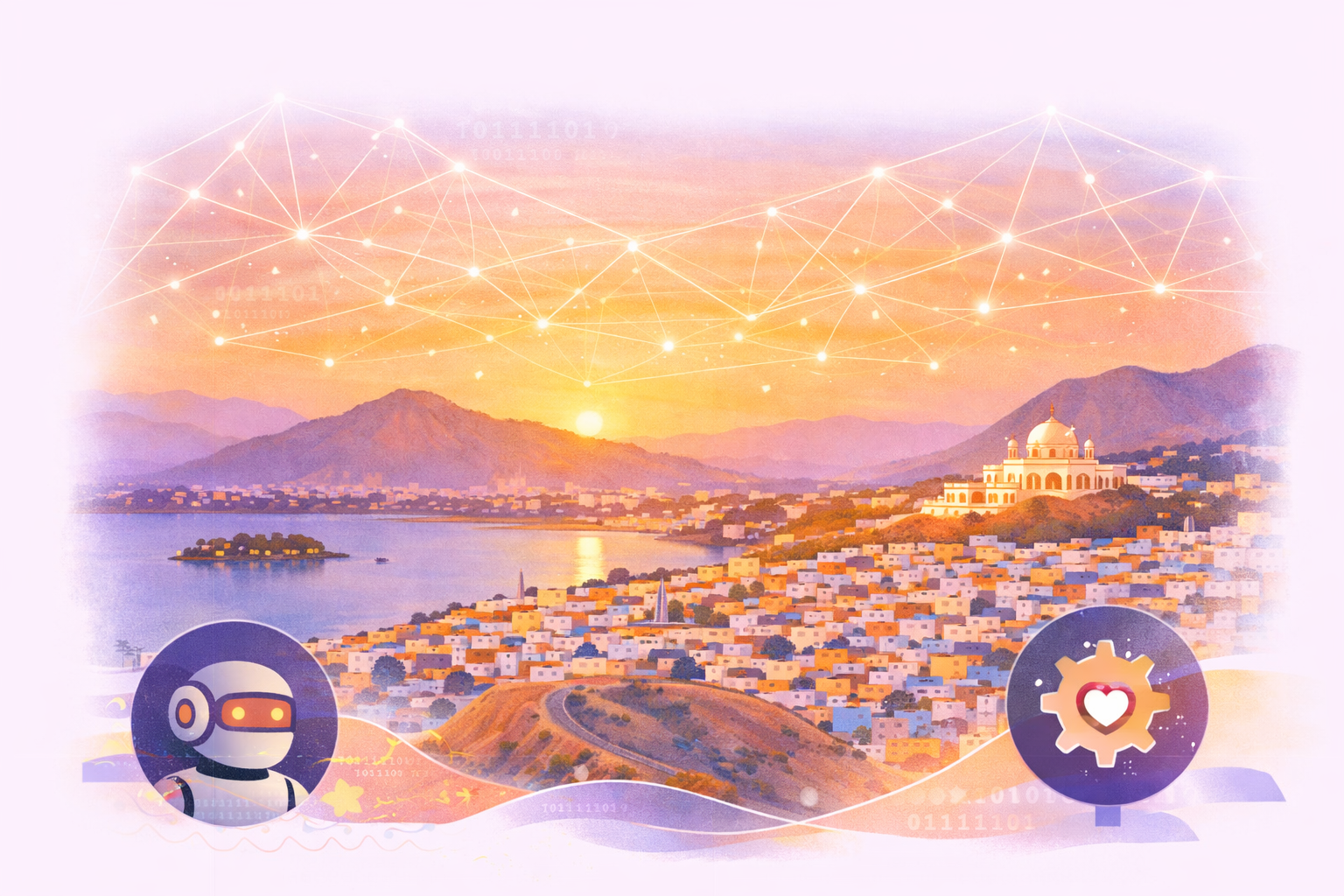
Ajmer is the city where I was born and raised. Growing up surrounded by its layered history, spiritual landmarks, and everyday rhythms, the city became deeply embedded in my memory and identity. From the serene waters of Ana Sagar Lake to the bustling streets surrounding Ajmer Sharif Dargah, the city is a place where culture, history, and daily life intersect.
This project, Rendering Home, emerged from a desire to reinterpret these familiar spaces through a new creative lens. Instead of using traditional filmmaking methods, I explored generative artificial intelligence as a storytelling medium. The goal was to create an AI-generated film that captures the emotional and cultural essence of Ajmer while experimenting with emerging technologies that are transforming visual storytelling.
Through this project, personal memory and technological experimentation come together to recreate a city that has shaped my life.
About Bhaskar Labs
Rendering Home was developed within the broader vision of Project Bhaskar, an initiative exploring the intersection of artificial intelligence, culture, and ethical technology.
Project Bhaskar is built on the belief that AI should not exist separate from human values and cultural context. As most global AI systems are trained primarily on dominant languages and datasets, many local cultures and knowledge systems risk being underrepresented in the digital age. Bhaskar aims to address this gap by developing AI technologies that reflect India’s linguistic diversity, cultural heritage, and intellectual traditions.
A key part of this vision is ensuring that Indian languages, histories, and cultural narratives have a meaningful presence within emerging AI systems, helping safeguard cultural identity in an increasingly digital world.
Ajmer plays a central role in this mission. Rather than building only in major technology hubs, Project Bhaskar situates innovation within a Tier-2 city rich in history and cultural diversity. The initiative aims to demonstrate that world-class AI research and creative experimentation can emerge from beyond traditional tech centers.
Within this broader framework, projects such as Rendering Home explore how generative AI can be used to reinterpret cultural memory and storytelling, bringing places, histories, and lived experiences into new digital forms.
Project Overview
Rendering Home is an AI-generated film that explores the historical evolution of Ajmer through a sequence of generative visuals. The film traces the region’s transformation across centuries, combining historical narrative with AI-powered visual storytelling.
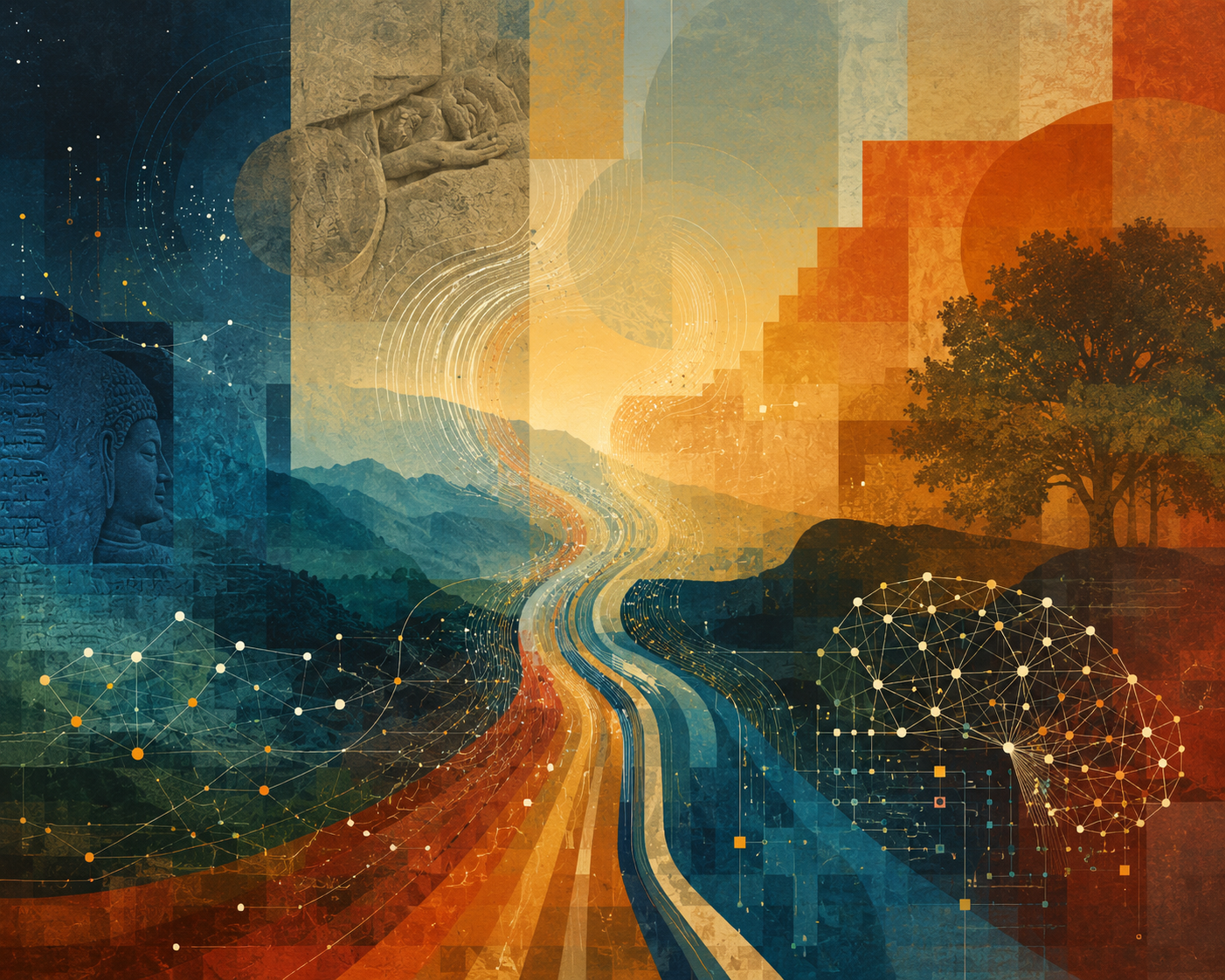
The film begins with a geological perspective, illustrating the formation of the Aravalli mountain range, one of the oldest mountain systems in the world, which shaped the natural landscape of the Ajmer region. From this foundation, the narrative moves through key historical phases that influenced the city’s development.
Using generative video tools such as Kling AI, the film recreates major historical transitions including the rise of the Chauhan dynasty, the establishment of the Delhi Sultanate, the period of Mughal rule, the influence of the Maratha confederacy, and the arrival of British colonial administration. Each period is visually interpreted through AI-generated scenes guided by carefully designed prompts.
The narrative concludes by transitioning into the modern city of Ajmer, connecting its present-day identity to the layers of history that shaped it. Through this approach, the film combines historical storytelling with generative technology to present Ajmer not just as a place, but as a landscape shaped by time, culture, and political change.
Concept and Narrative Direction
The conceptual foundation of Rendering Home emerged from a simple but powerful question: What did this place look like before I existed?
While sitting at familiar spots across Ajmer, near Ana Sagar Lake, within the streets surrounding Ajmer Sharif Dargah, or overlooking the Aravalli hills. The project began as an act of curiosity. Observing the present-day city naturally led to imagining the many historical moments that unfolded in the same spaces long before modern Ajmer existed.
Rather than focusing on personal nostalgia, the film approaches Ajmer as a layered historical landscape. Each location becomes a gateway into the past, prompting reflections on the events, rulers, and cultural shifts that gradually shaped the city over centuries. The narrative therefore unfolds as a journey through time. Through generative AI visuals, these historical moments are imagined and reconstructed, allowing the viewer to experience Ajmer as a place continuously shaped by changing political, cultural, and environmental forces.
In this way, Rendering Home treats the city not simply as a static location, but as a living archive of time, where the present is inseparable from the many histories that came before it.
Why AI Filmmaking?
Traditional filmmaking relies on cameras, physical locations, and manual visual effects. While these tools are powerful, generative AI introduces a different creative possibility: the ability to generate entire visual environments through text, prompts, and algorithms.
Using AI for this project allowed for:
Rapid visual experimentation
The ability to visualize places in imaginative ways
Exploration of generative aesthetics
A collaborative interaction between human creativity and machine interpretation
In this context, AI becomes not just a tool but a creative partner that interprets prompts and generates visual representations of a city. The unpredictability of AI outputs also contributed to the film’s aesthetic, creating moments where the generated imagery felt both familiar and dreamlike.
Research and Cultural References
To build an informed narrative around Ajmer’s historical evolution, the project drew upon a range of secondary sources including historical texts, documentaries, films, and digital archives. These sources helped establish the historical context for the different time periods represented in the film.
Online platforms such as Wikipedia and historical YouTube documentaries were used to gain an overview of major events and timelines associated with the Ajmer region. These resources provided accessible historical summaries that helped guide the chronological structure of the film.
In addition to digital sources, the project referenced historical texts including Har Bilas Sarda’s writings on Ajmer and Ajmer in the Nineteenth Century, which provided insights into the city’s political and social transformations during different periods of rule.
Visual inspiration was also drawn from historical films such as Jodhaa Akbar, which helped inform the visual interpretation of the Mughal era and the broader aesthetic language of historical storytelling.
Together, these sources contributed to shaping the narrative framework of the film, ensuring that the AI-generated reconstructions of Ajmer were grounded in recognizable historical contexts while still allowing room for creative interpretation.
Bibliography
Sarda, Har Bilas. Ajmer: Historical and Descriptive. Ajmer: Scottish Mission Industries Press, 1911.
Sarda, Har Bilas. Ajmer in the Nineteenth Century. Ajmer: Scottish Mission Industries Press.
“Ajmer.” Wikipedia. Wikimedia Foundation. https://en.wikipedia.org/wiki/Ajmer
Various creators. Historical Documentaries on Ajmer and Rajasthan. YouTube. https://www.youtube.com
Gowariker, Ashutosh, director. Jodhaa Akbar. UTV Motion Pictures, 2008.
Tools and Technologies
The creation of Rendering Home relied on a combination of generative AI tools that supported different stages of the filmmaking workflow, from prompt development to video generation.
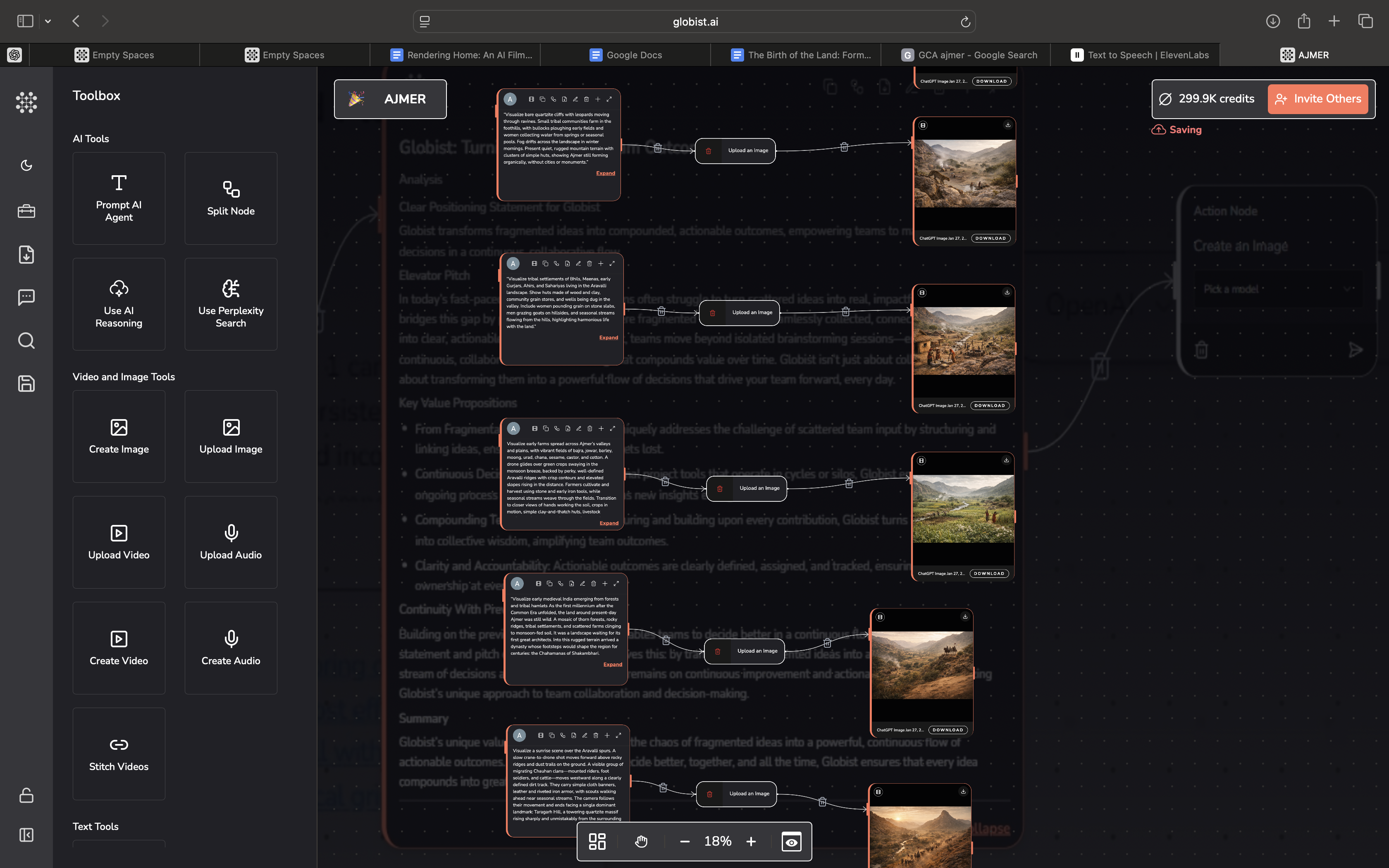
Globist AI
Globist AI was used to compile prompts and organize the generated visual outputs. It helped structure the creative workflow by managing prompts and assembling AI-generated images that formed the visual foundation of the film.
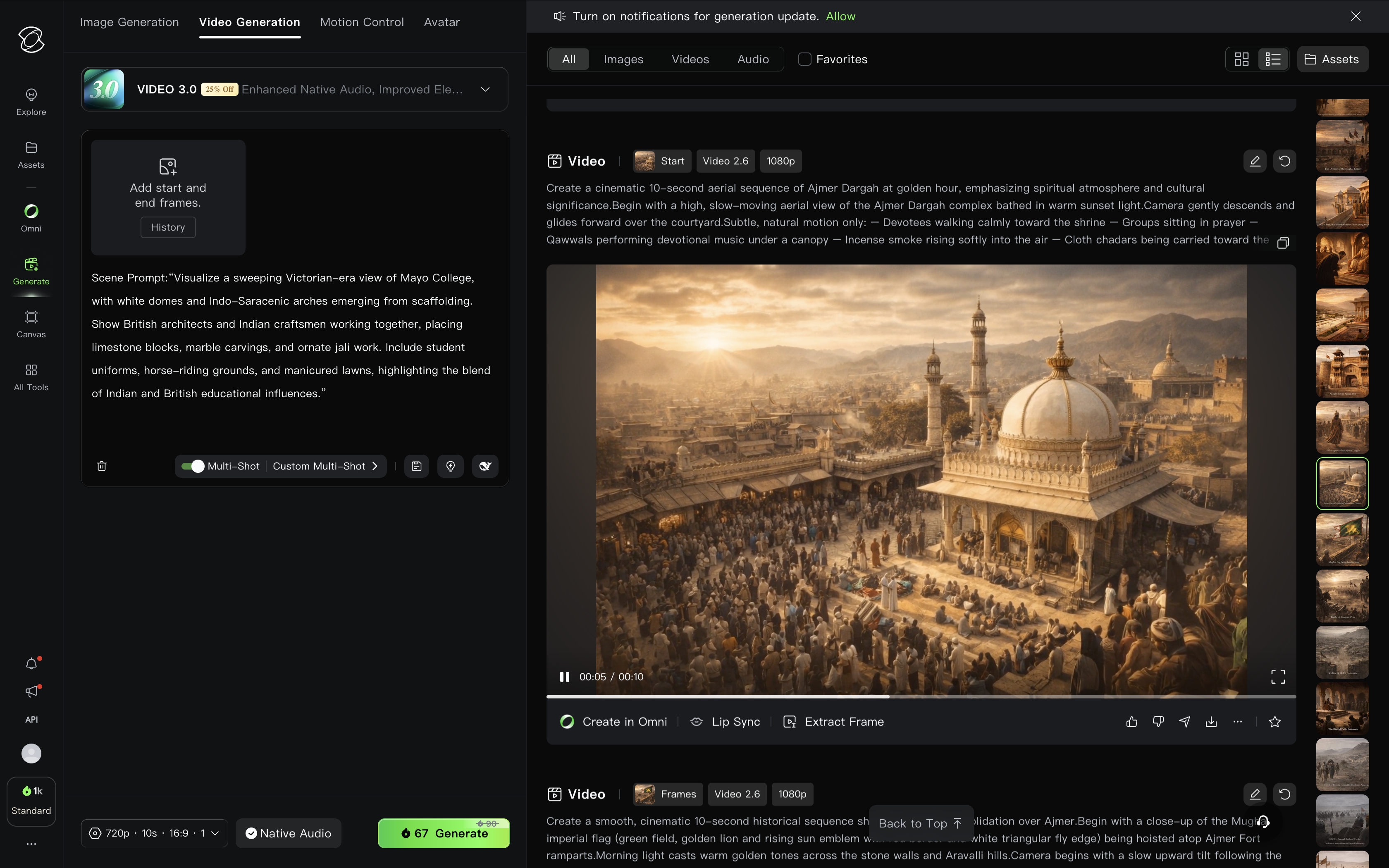
Kling AI
Kling AI was used for video generation, transforming still images and prompts into dynamic cinematic sequences. This tool enabled the creation of historical scenes representing different periods in Ajmer’s timeline.
ChatGPT
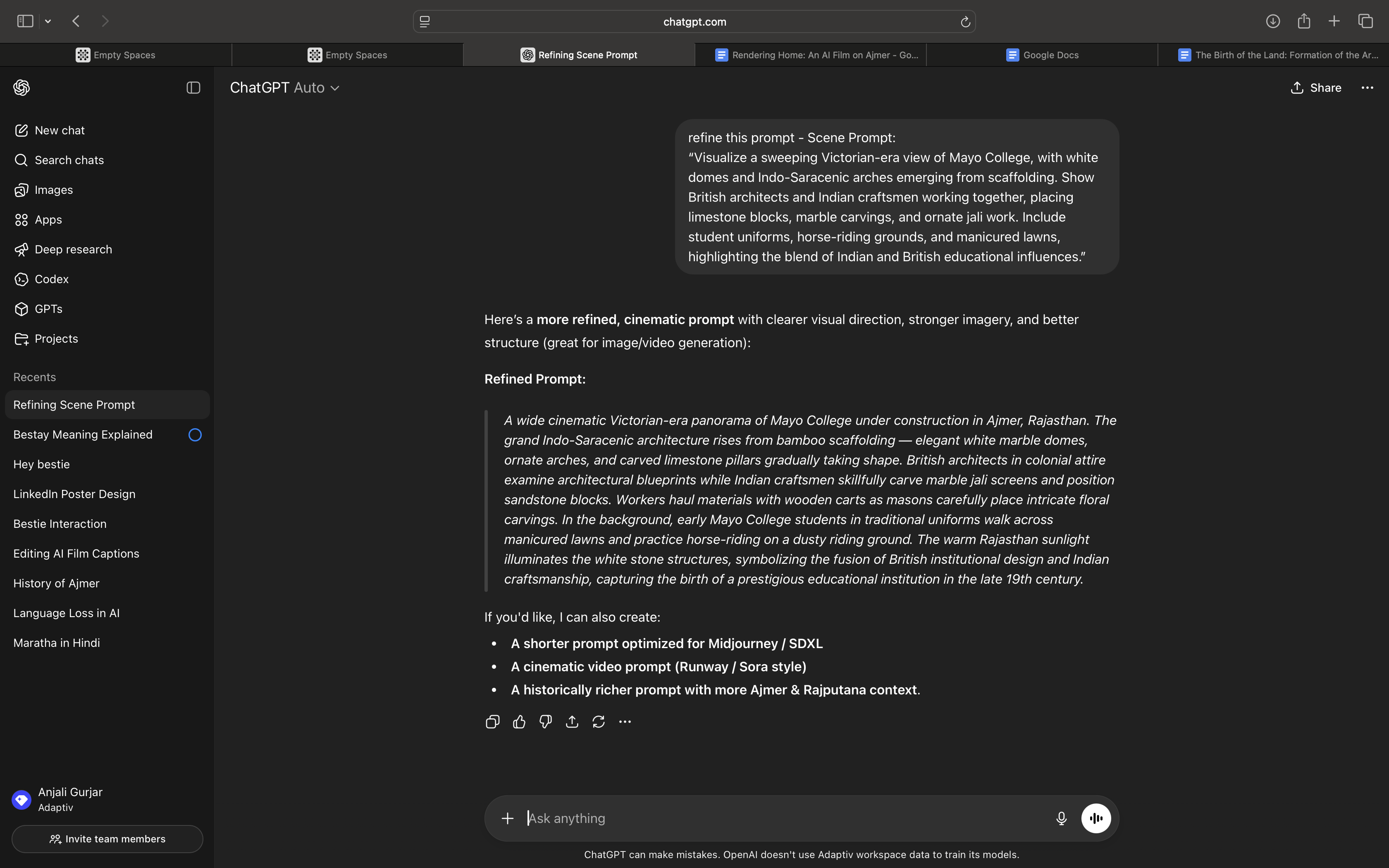
ChatGPT was used to refine prompts and assist in structuring descriptions for image and video generation. It helped improve the clarity and specificity of prompts, ensuring that the generated visuals aligned with the intended historical and narrative context.
Together, these tools formed a hybrid AI-driven workflow that combined prompt engineering, generative visuals, and video synthesis to produce the final film.

ElevenLabs
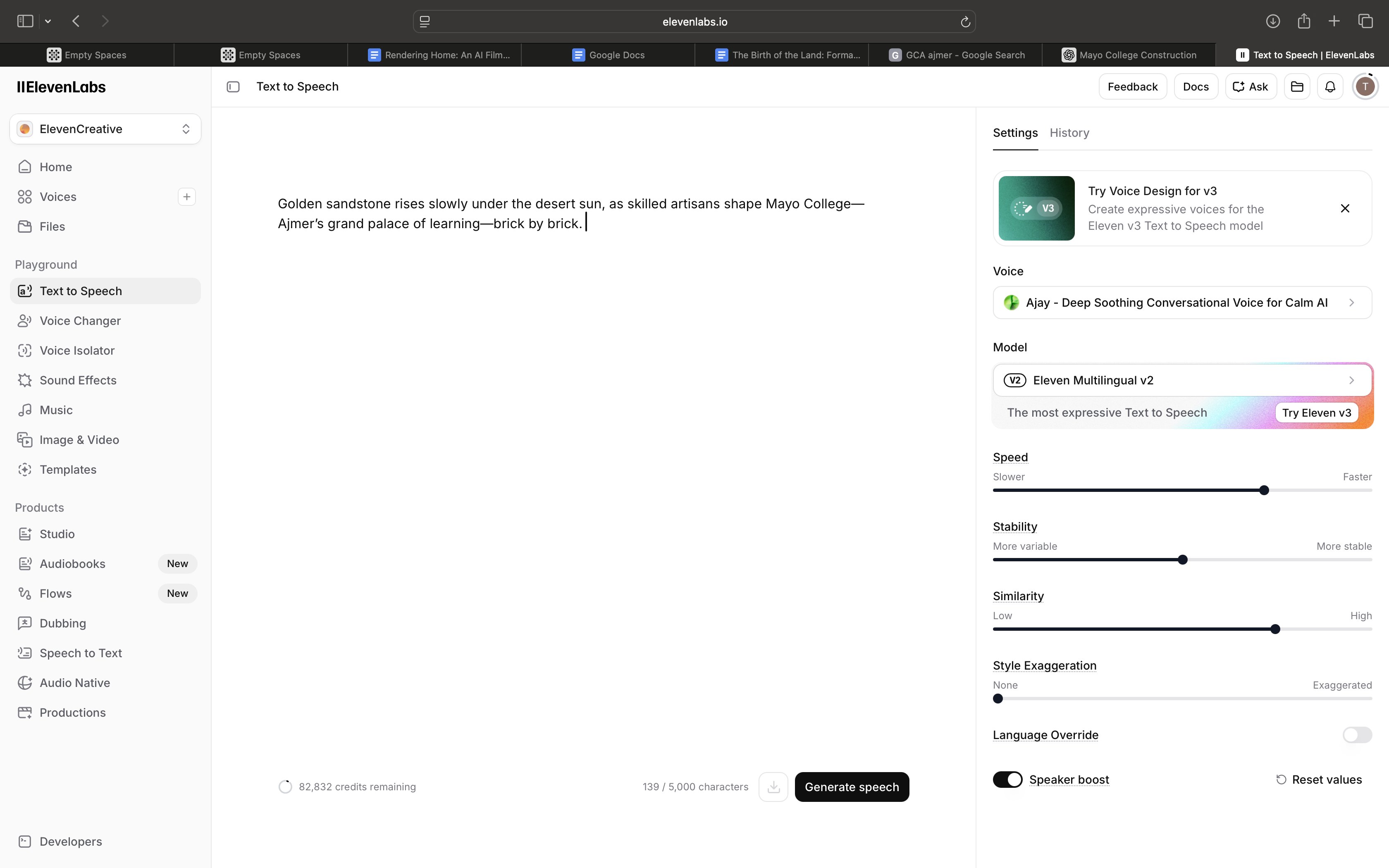
Elevenlabs was used for AI voice generation. The narration script written for each scene was converted into voice audio clips using ElevenLabs, allowing the film to include a consistent and expressive voiceover.
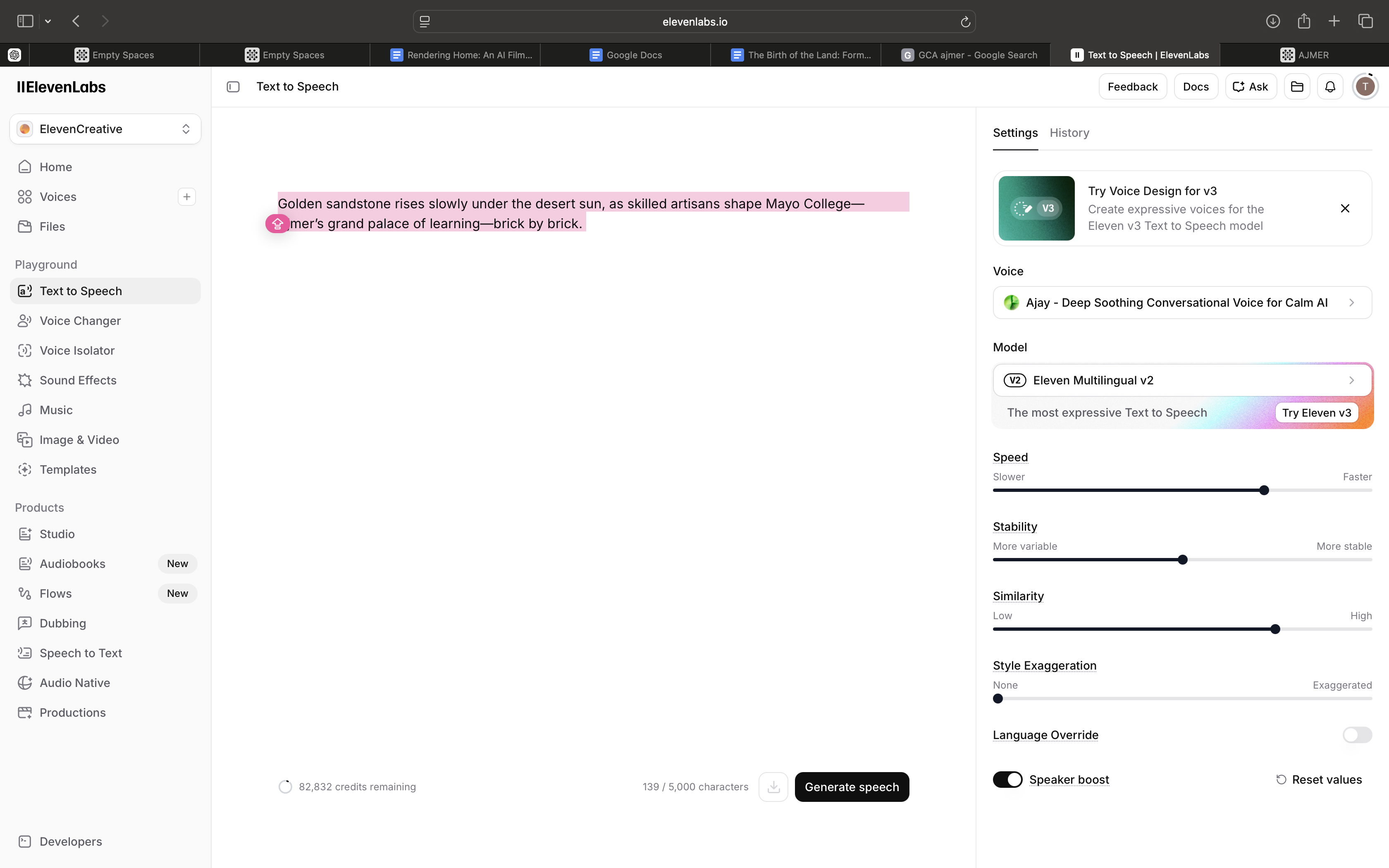
Together, these tools formed a hybrid workflow combining prompt design, generative visuals, AI voice synthesis, and editing, enabling the production of a complete AI-generated historical film.
Creative Process
The creation of Rendering Home followed a structured, multi-stage process combining historical research, prompt design, generative media production, and post-production editing.
Historical Research and Scene Planning
The project began with in-depth ground research into the major historical eras of Ajmer. Each period, from the geological formation of the Aravalli range to the Chauhan dynasty, Delhi Sultanate, Mughal rule, Maratha influence, British administration, and the modern city was studied to identify key events and themes that shaped the region.
Based on this research, notes were compiled outlining which historical moments would be represented visually in the film. These moments were then organized into a sequence of scenes, creating a chronological narrative structure.
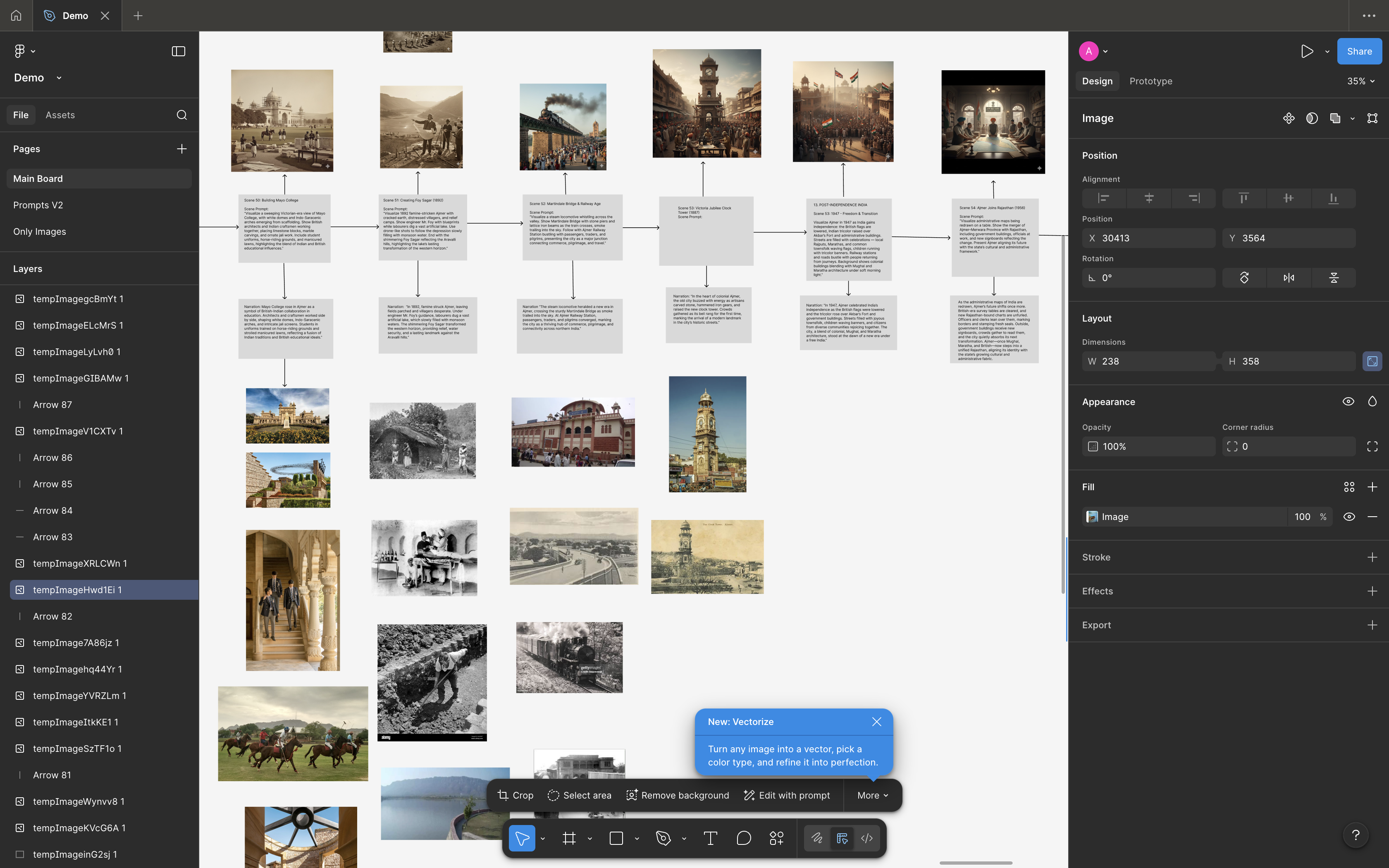
Image Prompt Development
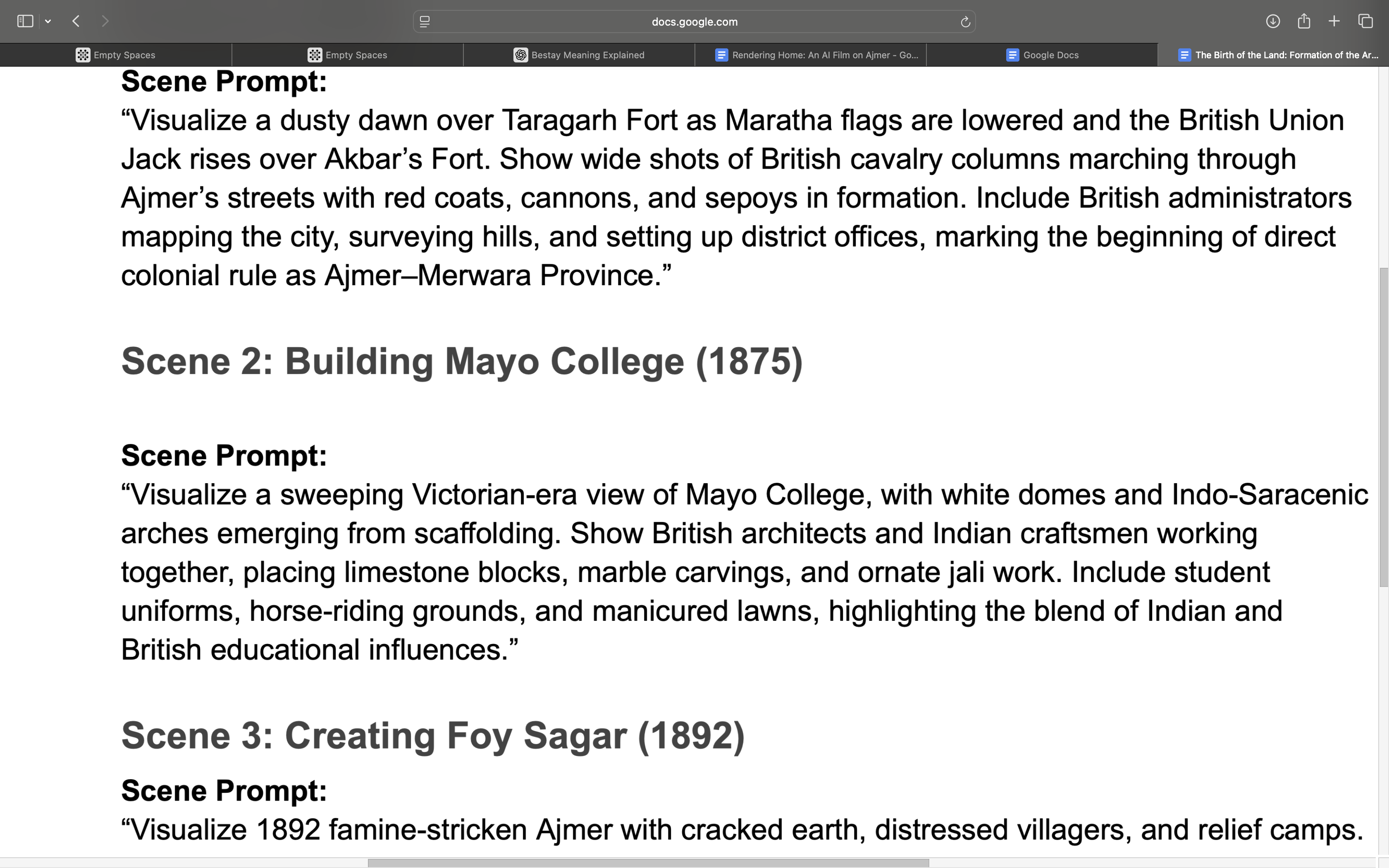
Once the scenes were defined, detailed prompts were written for image generation to visually represent each historical period. These prompts described the setting, architecture, environment, and atmosphere associated with each scene.
ChatGPT was used to refine and improve these prompts, ensuring clarity and specificity so that the generated images better reflected the intended historical context.
Video Generation
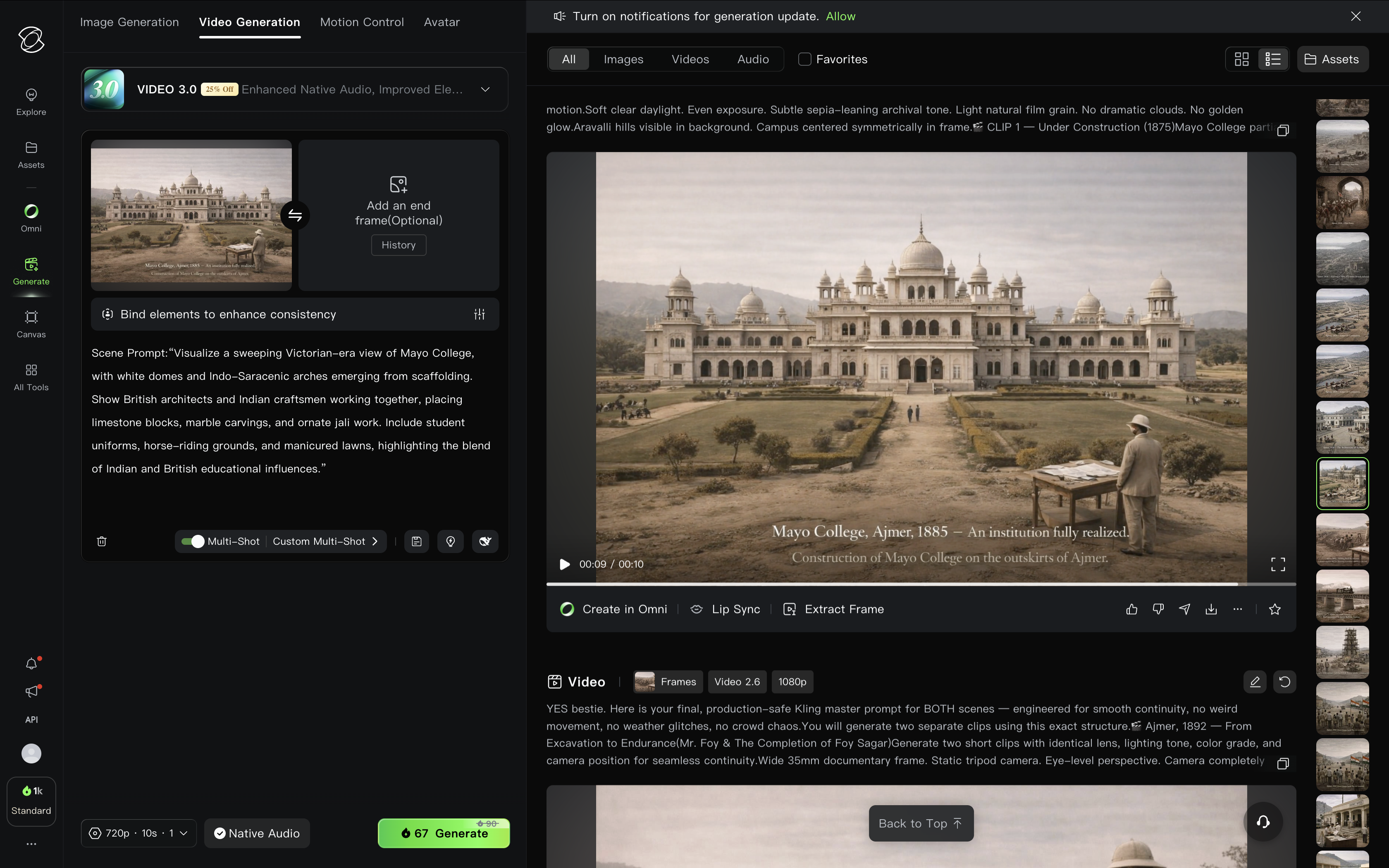
After generating the images for each scene, video generation prompts were created to animate the visuals and produce cinematic movement.
These prompts were again refined using ChatGPT before being used in Kling AI, where the prompts and corresponding images were combined to generate video sequences for each scene.
Script and Narration Development
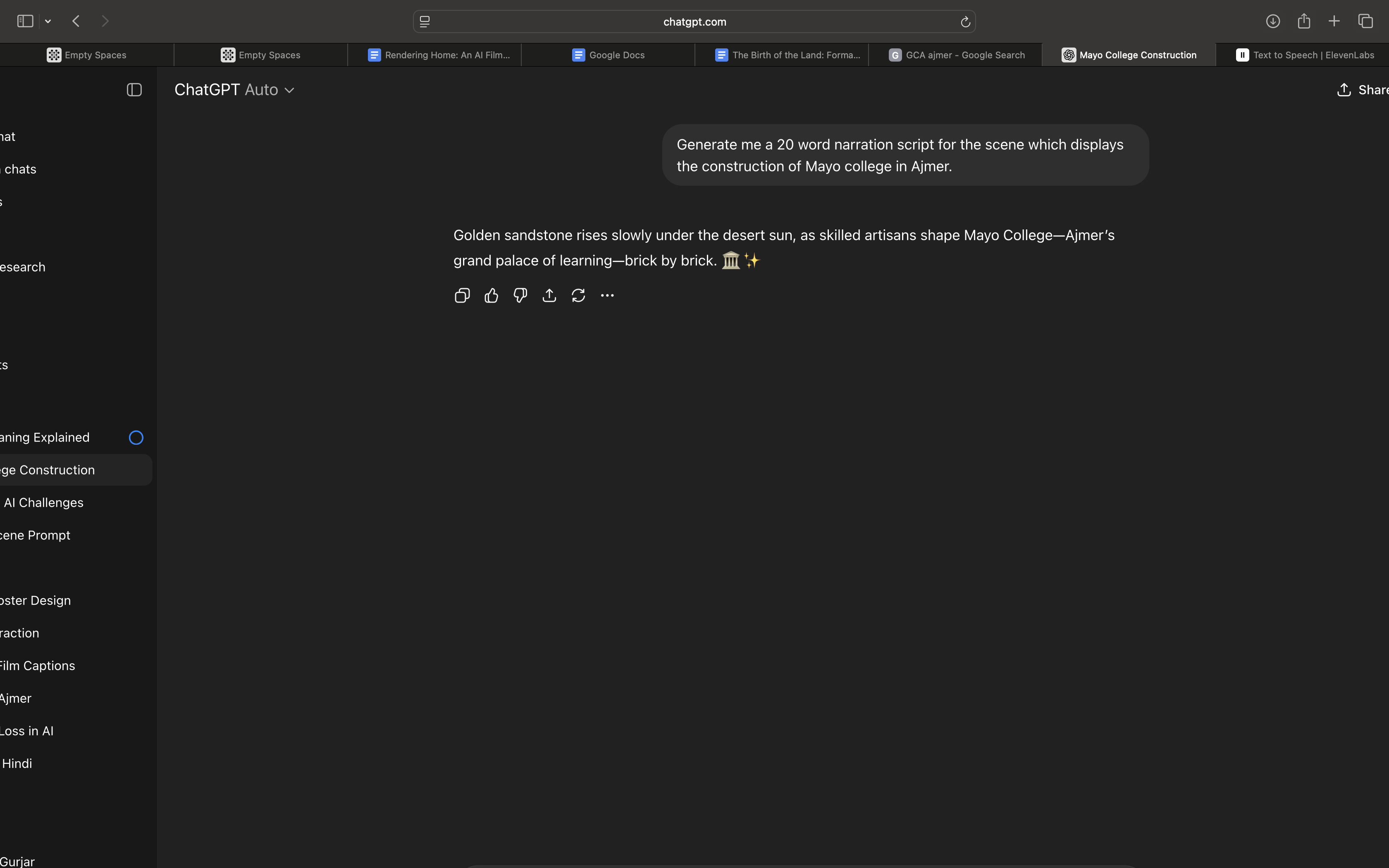
Alongside the visual creation process, a narration script was written for each scene. The narration aimed to balance historical accuracy with a poetic tone, allowing the film to communicate both factual information and reflective storytelling.
Voice Generation
The narration scripts were converted into audio using ElevenLabs, where each segment of narration was generated as a separate audio clip corresponding to individual scenes.
Editing and Assembly
Finally, all video clips and narration segments were assembled and edited using Canva. The scenes were stitched together in chronological order, aligning the visuals with the corresponding narration to create a cohesive historical narrative of Ajmer.
Through this workflow, the project combined research-driven storytelling with AI-assisted media generation, demonstrating how generative tools can be integrated into a structured filmmaking process.
Challenges and Learnings
Working with generative AI introduced several challenges throughout the project. One of the primary difficulties was achieving historical and architectural accuracy. AI models sometimes generated structures that resembled Ajmer’s landmarks but contained distorted or historically inaccurate details. This required multiple iterations of prompts and careful selection of outputs to ensure the visuals remained reasonably aligned with historical references.
Another challenge was that the AI video generation tool often struggled to interpret highly detailed or complex scene descriptions. In many cases, large scenes had to be divided into smaller segments and generated separately so that the AI could better understand the prompts. This process required experimenting with prompt wording and restructuring descriptions to guide the model more effectively.
Maintaining visual consistency across scenes was also challenging. Because generative AI produces varied outputs with each generation, ensuring that different scenes followed a similar visual style required repeated prompt refinement and experimentation. The AI occasionally produced distorted structures, unrealistic proportions, or inconsistent architectural styles, which required careful evaluation and regeneration of images.
During the project, I became familiar with several concepts related to generative AI workflows, including prompt engineering, text-to-image generation, scene generation, AI-generated imagery, and iterative prompting. Understanding how the AI interpreted prompts was an important learning process, as even small changes in wording could significantly affect the generated results.
The research process was also an important part of the project. To maintain historical relevance, I referred to Wikipedia, books, films, and documentaries available on YouTube to better understand Ajmer’s cultural and historical background. This helped guide the prompts and ensure that the generated visuals reflected key aspects of the city’s history.
Beyond the technical aspects, the project also provided meaningful personal insights. Through researching and recreating scenes from the past, I had the opportunity to rediscover the rich history of my hometown. Revisiting these historical narratives allowed me to develop a deeper appreciation for Ajmer’s cultural heritage and gave me a sense of pride and responsibility in representing and reimagining its story through modern technology.
Overall, the experience highlighted that while generative AI tools can greatly assist in visual storytelling, human creativity, research, and careful direction remain essential in guiding AI systems to produce meaningful and historically respectful representations.
Final Film / Outcome
The final result of Rendering Home is an AI-generated film that presents Ajmer through a hybrid lens of memory, research, and generative technology. The film blends atmospheric imagery, architectural references, and cinematic pacing to recreate a city that feels both recognizable and reinterpreted.
Rather than aiming for perfect realism, the project embraces the slightly surreal quality of AI-generated visuals, allowing the city to appear almost like a reconstructed memory. Through this approach, the film becomes not just a depiction of Ajmer but a reflection on how places are remembered and imagined.
Personal Reflection
Creating Rendering Home was both a creative and personal experience. Revisiting familiar places through AI-generated visuals allowed me to see my hometown in a new way.
The project revealed how technology can reshape storytelling, enabling creators to reinterpret real environments through computational imagination.
At the same time, it reinforced the importance of human perspective. While AI generated the visuals, the emotional core of the project came from personal memories of Ajmer — the streets, landmarks, and cultural spaces that shaped my upbringing.
In that sense, the film is not only an experiment in AI filmmaking but also a reflection on the idea of home.
Beyond the technical aspects, the project also led to a deeper understanding of Ajmer’s history. While researching and reconstructing different historical periods, from the Chauhan dynasty to the Mughal era and beyond, it became clear how many political, cultural, and social transitions the city has undergone over centuries. Learning about these layers of history offered a new perspective on the place I was born in. Becoming aware of how Ajmer evolved through these moments made the process of creating the film rewarding in itself.
Anjali Gurjar
@anjaligurjar-9703
Anjali is a technologist and AI researcher focused on building contextual intelligence systems rooted in Indian languages and culture. She leads initiatives at Bhaskar Labs across Indic language models, native AI applications, and AI-generated cultural media.