Why is deep reading important in the age of AI?
Geetanjali Shrivastava
Apr 9, 2026 · 4 min read
We are living through the most significant technological shift in human history. The technology that we are now using now - large language models, multimodal AI, generative systems of every kind - can summarise, translate, generate, and predict at a scale no human ever could. They are genuinely extraordinary. We use them every day at Project Bhaskar, and we believe they are essential to the cultural preservation work we are trying to do.
But they cannot yet do the three things that matter most: Think critically. Create originally. Feel empathy.
These are not soft skills. They are the hardest skills - the ones that determine whether technology serves human flourishing or merely accelerates human noise. And they are not innate. They are built slowly, through reading, sitting with a difficult argument and not skipping to the conclusion. Through inhabiting a character whose world is nothing like yours, returning to a book you read at twenty-five and discovering it has quietly become a different book.
The neuroscience is unambiguous: deep reading - the kind that literary fiction demands - activates the same neural pathways as lived experience. It builds theory of mind. It develops the capacity to hold complexity without resolving it prematurely. These are precisely the capacities that an AI-saturated world will reward, because they are the ones machines cannot replicate.
The irony is that the same digital revolution producing these extraordinary tools is also eroding our ability to read deeply. Attention is being restructured towards the fragment, the scroll, the summary. Indian youth, among the most digitally connected in the world, are also among the least likely to read for sustained periods. Our regional literature, one of the richest bodies of writing on earth, is largely invisible to them, untranslated, undigitised, unread.
This is not just a cultural footnote. It is a civilisational risk.
What we are building
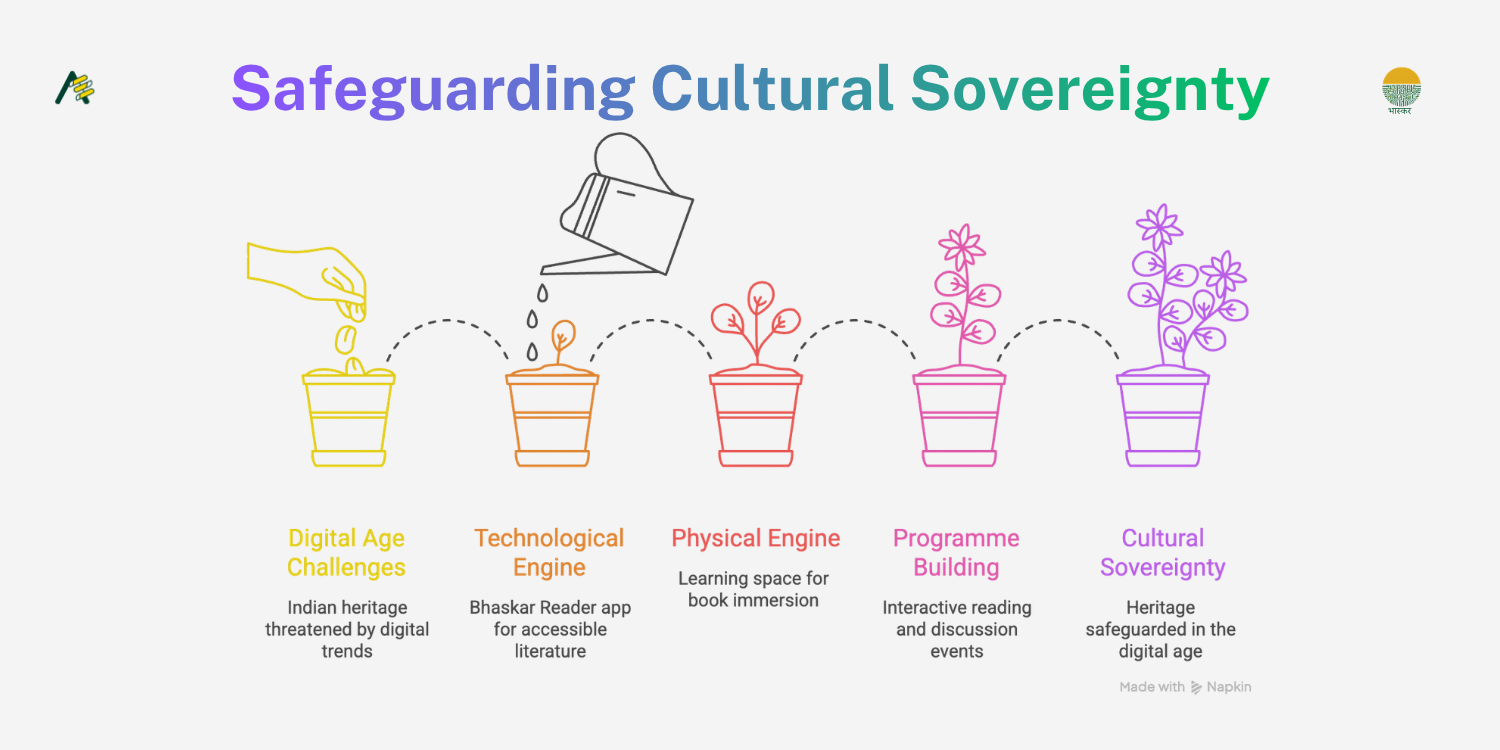
Project Bhaskar's mission is to blend cutting-edge AI with India's 5,000-year heritage - to safeguard cultural sovereignty in the digital age. That mission has two engines.
The first is technological. We are building the Bhaskar Reader - an app designed to bring Indian regional literature to young readers in accessible, beautiful, contextualised form. Curated reading lists across languages, author profiles, cultural context, reading communities. The goal is not to replace the experience of reading in one's mother tongue - it is to create the gateway that makes that experience possible again. To rekindle, in a generation raised on reels and recommendations, the appetite for the long, slow, transformative experience of a book.
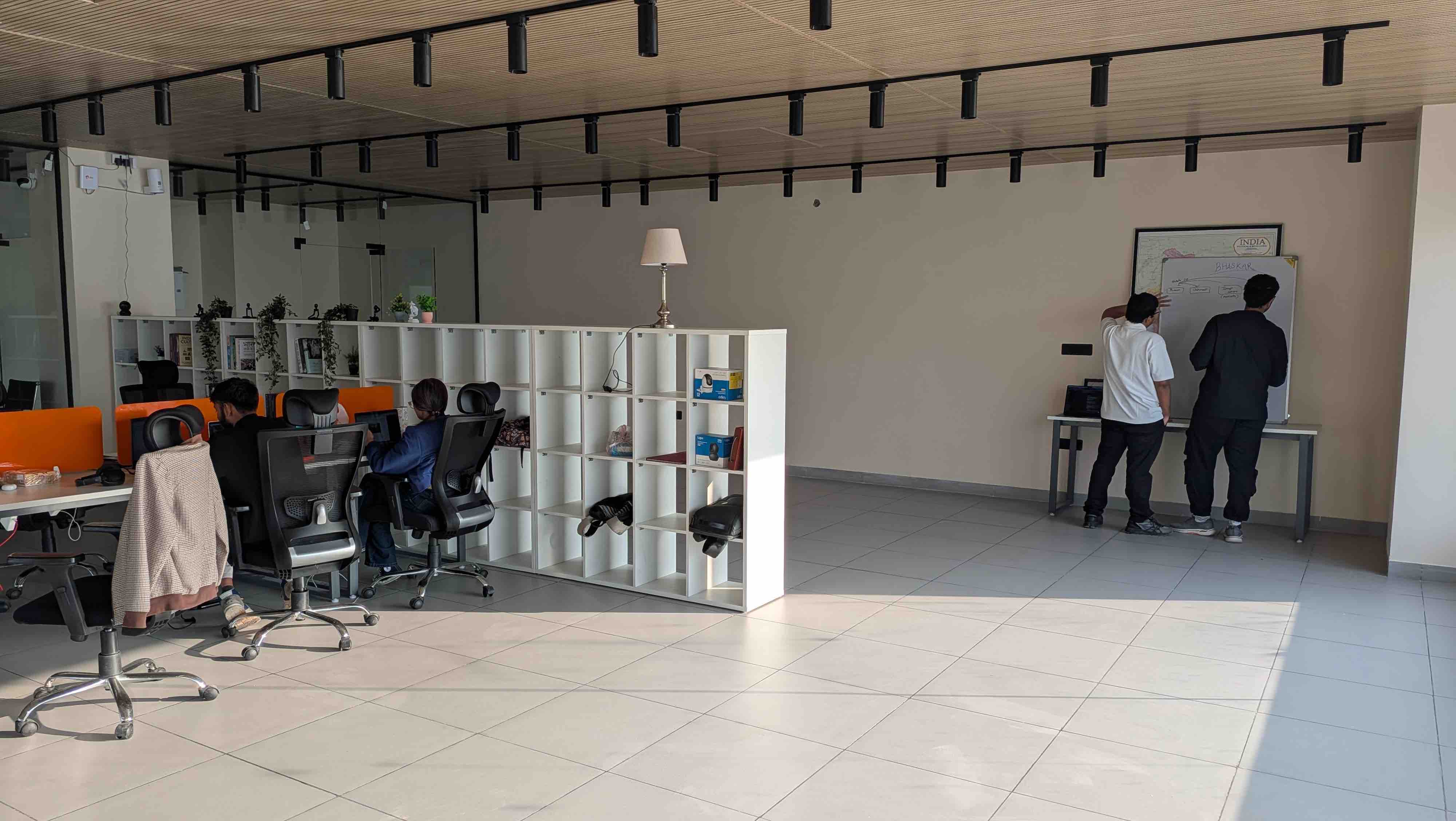
The second engine is physical. We are creating a learning space - an open, welcoming, unhurried space where people are invited to come and simply be with books. Not a library in the institutional sense, but a room that says: there is no agenda here except thinking.
Around that space we are building a programme and a space that treats intellectual life as social life, because for most of human history, it was.
The longer argument
Every tool we build, every archive we create, every AI model we train on Indian cultural data - all of it requires people who can think, not just prompt. Who can ask whether something should be built, not just whether it can be. Who bring to their work not just technical competence but historical imagination and moral seriousness.
Those people are made by reading.
The Project Bhaskar library is not decorative. Nor is it a background for photographs (though it makes a good one). It is the place where the work actually begins - before the screen, before the model, before the output.
We believe that a country which reads its own literature deeply will make better decisions about its own future. We believe that an AI built with genuine cultural understanding is more useful, more honest, and less dangerous than one built without it.
And we believe that the glass-walled room in Ajmer, with its shelves of Romila Thapar and Amitav Ghosh, William Dalrymple and R.K Narayan, and Nitin Seth and Berger, is as important to Project Bhaskar's mission as any line of code we will ever write.
Come and read with us.
Project Bhaskar is a documentation, revival and technology project based in Ajmer, Rajasthan. The Bhaskar Reader app is currently in development. To learn more or to get involved, write to us at geetanjali@adaptiv [dot]me
Geetanjali Shrivastava
@geetanjalishrivastava