Twelve Stamps and a City Rediscovered: Closing Out Independence Month at Project Bhaskar
Adaptiv Admin
Aug 28, 2026 · 5 min read
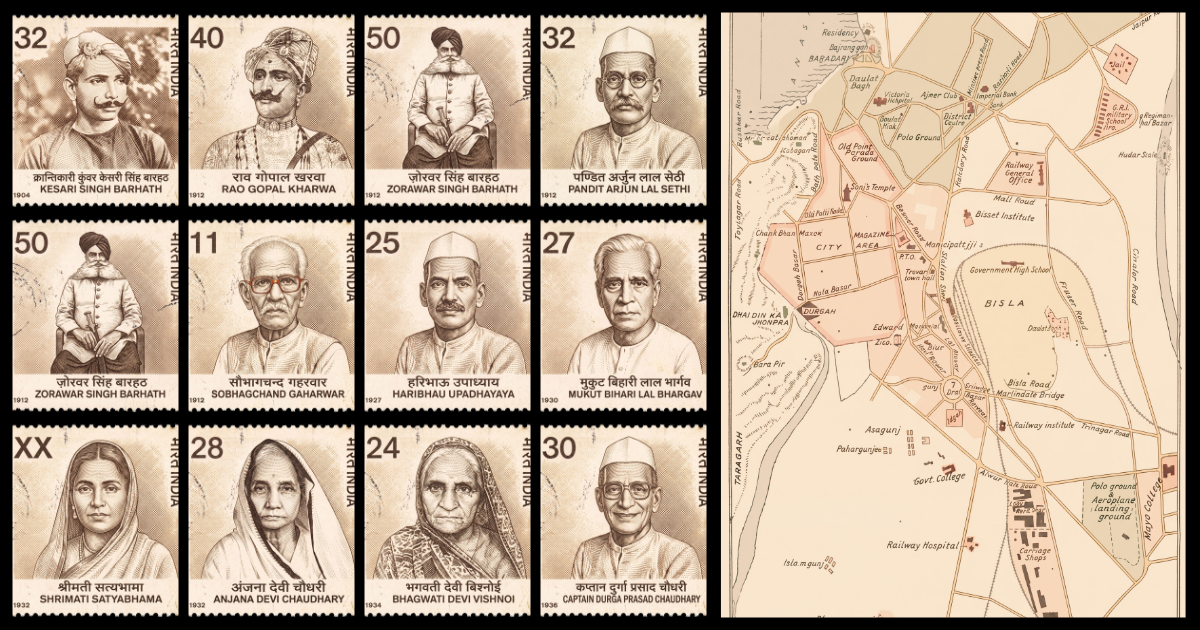
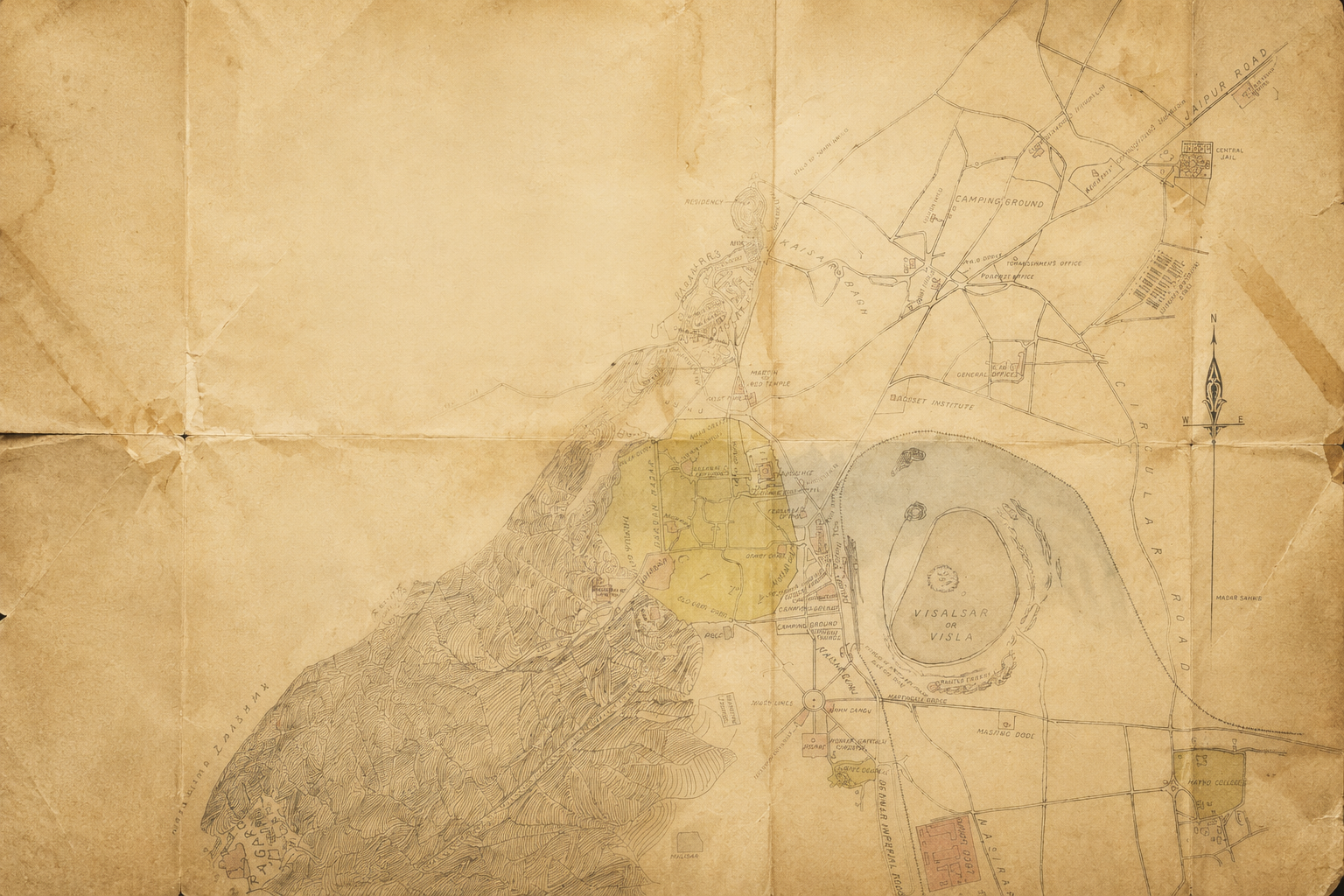
In June, 1000 Years of the Valley asked visitors to walk through a millennium of Ajmer's history — Chahamana fort to railway hub to state capital — told entirely through maps. By the time that show came down in July, one question from it had refused to leave the room: we had told the story of the land. We had not yet told the story of the people who fought to keep it free.
That gap became the starting point for this August's exhibition, and for what ended up being the focus of the official opening of Chhaon, India's first co-working community inside an urban forest.
Twelve Names the Textbooks Skipped
We went looking for freedom fighters with an Ajmer address, and the research surprised even us. This was not a sleepy princely town that sat out the freedom struggle and waited for Delhi to sort it out. A Jain education society here quietly ran a bomb-making school. A railway worker climbed a workshop roof in 1930 and pulled down the Union Jack in front of colleagues who could have reported him by evening. A Mewar court poet wrote a poem sharp enough to make a Maharana skip his own durbar. Even women organised, marched, and went to prison — one of them refusing a private cell so she could stay with the other women, her infant daughter beside her the whole time.
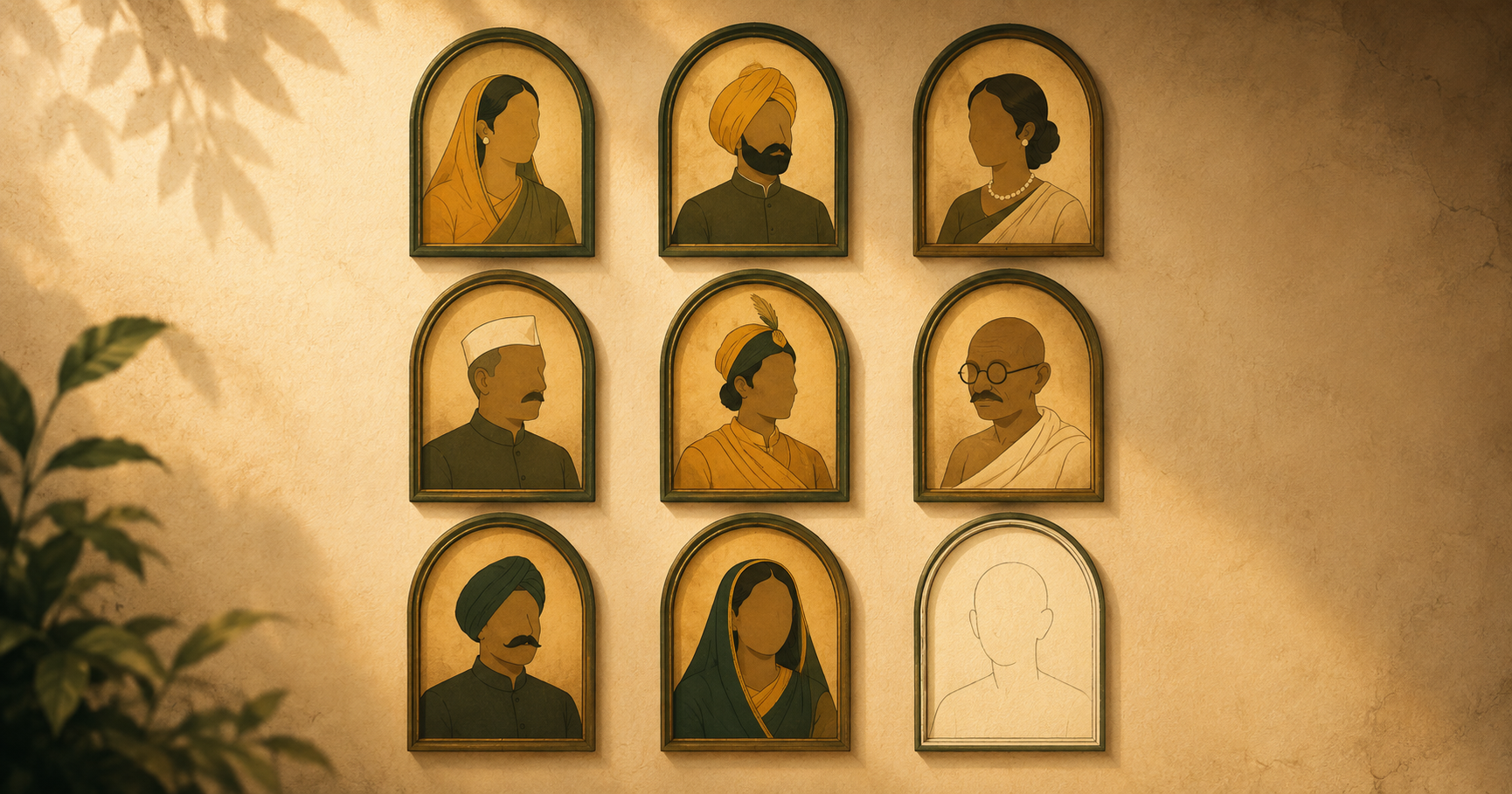
Twelve of these lives became the exhibition: Arjun Lal Sethi, Zorawar Singh and Kesari Singh Barhath, Rao Gopal Kharwa, Baburam Bahamkavi, Mukut Behari Lal Bhargava, Haribhau Upadhyaya, Captain Durga Prasad Chaudhary, Sobhagchand Gaharwar, Satyabhama, Anjana Devi Chaudhary, and Bhagwati Devi Vishnoi. Almost none of them have a surviving photograph. So we built each one as a postage stamp — a format that has always been India's own small archive of who we've decided is worth remembering — using technology to help us recreate a portrait based on the best available descriptions and sources, sitting alongside the year and the age at which that person did the thing that put them on our wall.
Each panel opens the same way: not with the fact, but with the choice behind it. A teacher pulls you aside after class and offers you something that could get you hanged. Do you walk through that door? Only after you go through that does the panel tell you what Pandit Arjun Lal Sethi actually did. It's a small structural decision, but it changes what a visitor takes away — you don't read these as history so much as you read them as a decision you're being asked to make in someone else's shoes.
What a Thousand Years Couldn't Show Us
1000 Years of the Valley had already made the case that Ajmer's geography — the Aravalli gap, the lake, the height of Taragarh — had decided the shape of the city's history. This one made the case that the city's people decided the shape of its freedom. Visitors who had walked both shows kept arriving at the same observation, unprompted: after a thousand years of watching empires move through this valley, Ajmer wasn't a bystander to its own independence. It was one of the rooms where the plan was made.
That was, in the end, the whole point of putting this up during Independence Month. If freedom is a story that only happened in Delhi and in the textbooks, it's easy to leave the responsibility for it there too. If it happened in your own railway workshop, your own market square, your own back room behind a school — it stops being someone else's history.
Swatantrata Sangram Ke Nayak: 45+ Entries Later
Running alongside the exhibition was our second open call of the year — Swatantrata Sangram Ke Nayak, asking people to write about the one freedom fighter who had, for some personal reason, stayed with them. We didn't restrict it to Ajmer, or to the familiar six names every textbook repeats, and the response told us we'd hit something real: we received submissions from across the country in Hindi and English, from school students and working professionals, from Ajmer and from well beyond it in just a week.
We wrote up our ten favourites — and the stories behind Matangini Hazra, Baji Rout, Rani Gaidinliu, and others that entrants refused to let stay forgotten — in Swatantrata Sangram Ke Nayak: The Stories That Stayed With Us. The winners were felicitated at the opening of the Chhaon Library, where their essays, portraits, and quote cards now sit on a winners' wall for anyone visiting the library to read.
Between the heroes' wall and the winners' wall at Chhaon, the same idea kept surfacing in different conversations this month: the freedom struggle was never the property of a handful of famous names. It was carried, in large part, by people like you and me. It made us realise that most of the people who changed something were, right up until the moment they didn't stay ordinary, entirely ordinary. Those stories are perhaps harder to tell than those of heroes. It's also, I think, the only version of the story that leaves you asking what you can do with your own ordinary Tuesday.
Adaptiv Admin
@admin
Building the future of AI products at Adaptiv.Me.